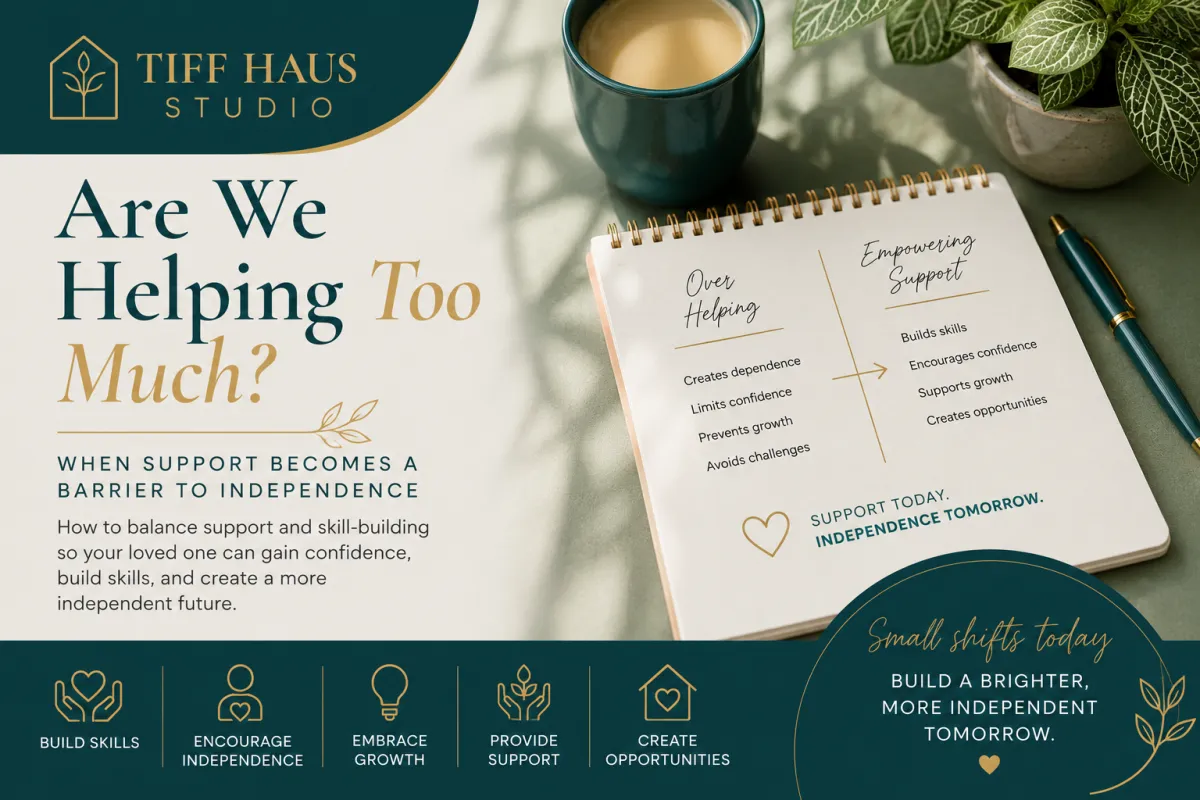
Are We Helping Too Much? When Support Becomes a Barrier to Independence
As parents, caregivers, and professionals, our instinct is to help.
We help because we love.
We help because we want to protect.
We help because we know how hard the world can be for individuals with intellectual and developmental disabilities.
But what if some of our help is actually standing in the way of independence?
That question can be uncomfortable.
It can feel personal.
It can even feel unfair.
Yet it is one of the most important conversations happening in the disability community today.
The Independence Paradox
Most families want their loved one to become as independent as possible.
At the same time, many families spend years stepping in before mistakes can happen.
We answer questions for them.
We make phone calls for them.
We order their food.
We manage their schedule.
We solve problems before they have the chance to try.
And while these actions often come from a place of love, they can unintentionally send a message:
"You can't do this without me."
Over time, that message can become a belief.
Support Should Build Skills, Not Dependence
The goal of support should not be to make life easier today.
The goal should be to build skills that create more independence tomorrow.
That might mean allowing someone to:
Make a mistake
Feel frustrated
Solve a problem
Ask for help
Learn through experience
Growth rarely happens when someone is constantly rescued.
Growth happens when support is provided at the right level.
Not too much.
Not too little.
Just enough.
Signs You May Be Over Supporting
Ask yourself these questions:
Am I doing things they could learn to do themselves?
Am I speaking for them when they can communicate their own needs?
Am I making decisions they could participate in making?
Am I avoiding teaching a skill because it takes longer?
Am I protecting them from failure at the expense of growth?
If you answered yes to any of these questions, you are not alone.
Most families have been there.
The good news is that awareness creates opportunity!
Independence Doesn't Mean Doing Everything Alone
One of the biggest myths about independence is that it means needing no support.
That is simply not true.
Every adult receives support.
We use GPS.
We ask friends for advice.
We hire accountants.
We rely on coworkers.
Independence is not about doing everything yourself.
It is about having the skills, confidence, and supports needed to live a meaningful life.
For some individuals, independence may look like living alone.
For others, it may mean living with support while making their own decisions.
Both can be successful outcomes.
The Power of Productive Struggle
Many parents worry about allowing their child to struggle.
But productive struggle is where learning happens!
Consider these examples:
Ordering food at a restaurant
Calling to schedule an appointment
Creating a grocery list
Managing a budget
Solving a disagreement with a friend
These situations may feel uncomfortable.
That discomfort is often where confidence is built.
Every time someone successfully navigates a challenge, they gain evidence that they are capable.
Questions Every Parent Should Ask
Instead of asking:
"How can I help?"
Try asking:
"What part of this can they do themselves?"
Instead of:
"How can I prevent mistakes?"
Ask:
"What can they learn from this experience?"
Instead of:
"What if they fail?"
Ask:
"What if they succeed?"
Those small mindset shifts can create significant changes over time.
The Future Starts With Today's Decisions
Many parents worry about who will support their loved one in the future.
The answer begins with the skills being developed today.
Every opportunity to make a choice.
Every opportunity to solve a problem.
Every opportunity to learn a life skill.
These moments become the foundation for future independence.
The goal is not to remove support.
The goal is to provide support that empowers rather than enables.
At Tiff Haus Studio, we believe that independence is built through real life experiences, practical skills, and the confidence that comes from doing things for yourself.
Sometimes the most powerful thing we can do is step back just enough to allow growth to happen. Not sure how to do this? Schedule your FREE Clarity Call - let's map out your first steps together!
Because what feels like helping today may be limiting tomorrow.