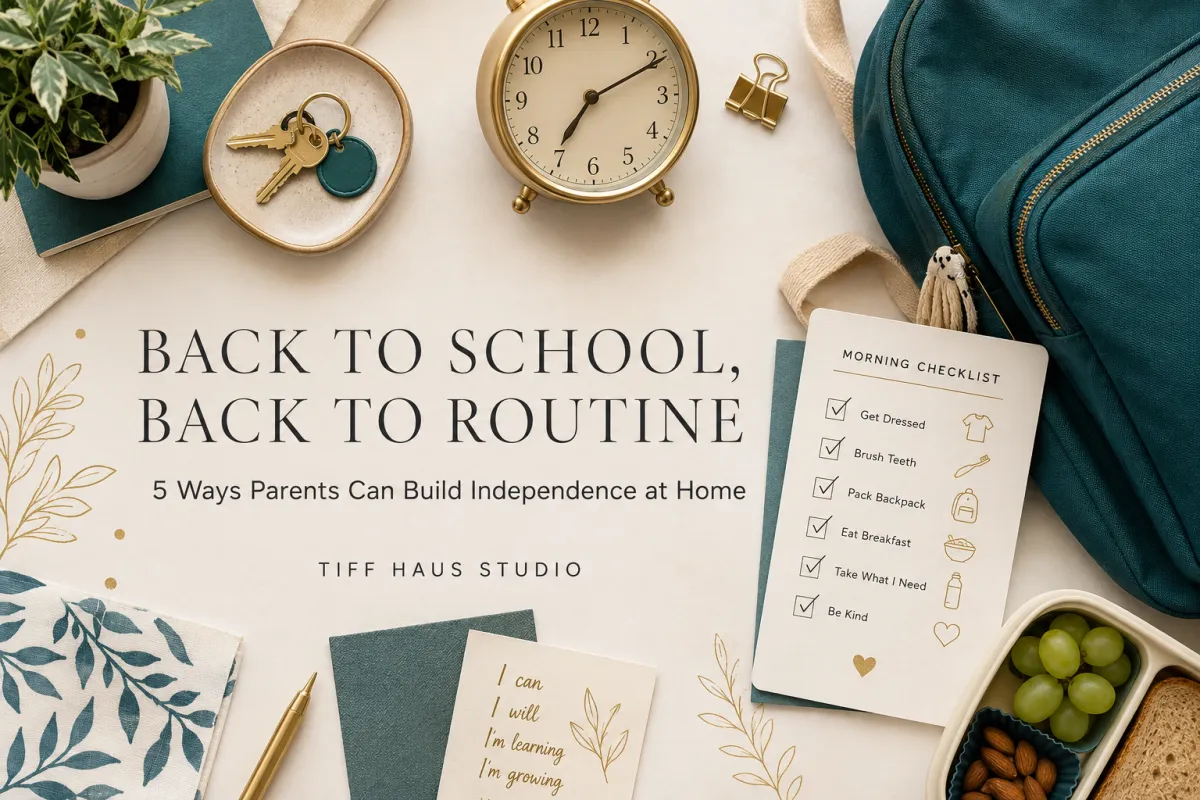
Back to School, Back to Routine: 5 Ways Parents Can Build Independence at Home
The beginning of a new school year brings new teachers, new schedules, new expectations, and often a lot of new emotions.
For parents of children, teens, and young adults with intellectual and developmental disabilities, back to school can feel like a fresh start. It can also feel overwhelming.
You may be focused on transportation, classroom supports, IEP goals, medications, lunches, communication with teachers, and helping your child adjust. With so much happening, independence skills may feel like something to work on later.
But the return to a predictable school routine can actually be one of the best times to build independence at home.
How Can Parents Encourage Independence During the School Year?
Parents can encourage independence by choosing one small daily responsibility, teaching it with clear steps, providing visual or verbal support, and gradually reducing help as the skill improves.
The goal is not to expect your child to do everything alone. The goal is to give them regular opportunities to participate, practice, make choices, and experience success.
Here are five practical ways to begin.
1. Create a Simple Morning Routine
School mornings can be rushed, but that does not mean parents have to complete every task for their child.
Choose one part of the morning routine your child can begin doing more independently.
This might include:
• Turning off the alarm
• Getting dressed
• Brushing teeth
• Putting on shoes
• Packing a backpack
• Filling a water bottle
• Checking for a lunch or communication folder
Break the task into small, clear steps. A visual checklist may help your child remember what comes next without needing repeated reminders.
Tiff’s Tip
Start with the part of the morning that causes the least stress. Success builds confidence. Once that step becomes familiar, you can add another.
2. Give Your Child an After School Responsibility
After a long school day, many individuals need time to rest and regulate. That is completely understandable.
After that transition time, introduce one small responsibility.
Your child might:
• Put their backpack in the same place
• Place their lunch container by the sink
• Take papers out of their folder
• Change into comfortable clothes
• Plug in their school device
• Choose a snack
• Check the next day’s schedule
These small routines teach organization, responsibility, and preparation. They also reduce the number of things parents have to remember.
3. Let Your Child Make More Everyday Choices
Independence includes being able to identify preferences and communicate decisions.
Look for simple choices throughout the day.
For example:
• “Would you like the blue shirt or the green shirt?”
• “Do you want to shower before dinner or after dinner?”
• “Would you like apples or crackers for your snack?”
• “Do you want to do homework at the table or at your desk?”
Offer two or three realistic options rather than asking an open ended question that may feel overwhelming.
Choice making helps individuals practice self advocacy and understand that their preferences matter.
4. Pause Before Automatically Helping
Parents are often incredibly good at anticipating what their child needs. You may zip the jacket, open the package, answer the question, or gather the missing item before your child has a chance to try.
During the school year, practice adding a short pause before stepping in.
Ask yourself:
• Can my child attempt this independently?
• Could I give a hint instead of doing it for them?
• Can I complete only the part they cannot do yet?
• Am I helping because help is needed, or because it is faster?
There will always be times when helping is appropriate. The goal is simply to notice when a little extra time could create a learning opportunity.
5. Choose One Independence Goal for the School Year
You do not have to work on everything at once.
Choose one meaningful skill that would make daily life easier or help your child feel more capable.
Possible goals include:
• Preparing a simple breakfast
• Following a hygiene routine
• Doing a load of laundry
• Managing a small amount of money
• Ordering food at a restaurant
• Asking a teacher for help
• Remembering personal belongings
• Following an after school schedule
• Preparing clothes for the next day
• Using a phone calendar or reminder
Write the goal down and share it with your child’s support team when appropriate. Practicing the same skill at home, at school, and in the community can help the skill become more useful in everyday life.
What If My Child Resists New Responsibilities?
Resistance does not always mean a person is unable or unwilling to learn.
A new responsibility may feel confusing, difficult, unpredictable, or like an interruption to a preferred routine. Your child may also be tired after managing the demands of the school day.
If your child resists:
Make the task smaller.
Use clear and simple instructions.
Show what the finished task looks like.
Offer limited choices.
Use a visual checklist or timer.
Practice when everyone is calm.
Recognize effort, not only perfect completion.
You can also use a simple token system, first and then language, or a preferred activity as motivation.
For example: “First, put your lunch container by the sink. Then you can watch your show.”
Support should make the task easier to understand without removing every opportunity to participate.
How Much Help Should Parents Provide?
Provide enough help for your child to experience success, but not so much that they never have an opportunity to try.
You might begin by demonstrating the task, then completing it together. Next, move to verbal reminders, gestures, visual supports, or occasional check ins.
As the skill improves, gradually reduce your support.
Independence does not mean completing every task without assistance. It means having the greatest possible level of choice, participation, confidence, and control over one’s own life.
A New School Year Is a New Opportunity
You do not need an elaborate program to begin teaching independence!
Start with one routine.
Choose one responsibility.
Allow one extra opportunity to make a decision.
Pause for a few seconds before stepping in.
Small moments of practice can become meaningful skills over time. Those skills can help your child feel more confident at home, at school, and in the community.
At Tiff Haus Studio, we help individuals with intellectual and developmental disabilities build practical skills for greater independence. We also help families identify realistic next steps that fit their loved one’s strengths, needs, and goals, and create custom tools for making it all happen!
Ready to create a personalized path toward greater independence? Schedule a free 20 minute Clarity Call with Tiff Haus Studio.
Frequently Asked Questions
What are good independence skills to practice during the school year?
Good school year independence skills include following a morning routine, packing a backpack, managing personal belongings, choosing clothing, preparing a snack, completing hygiene tasks, and asking for help.
How do visual schedules support independence?
Visual schedules show what needs to happen and in what order. They can reduce repeated verbal reminders, make routines more predictable, and help individuals complete more steps independently.
What should I do if my child can complete a task but will not do it?
Consider whether the task is clear, manageable, and motivating. Break it into smaller steps, offer choices, use visual supports, and provide a meaningful reason or reward for completing it.
Can someone still be independent if they need support?
Yes. Independence does not mean living or completing every task without help. A person can use support while still making choices, participating in decisions, communicating preferences, and taking an active role in daily life.
When should families begin teaching independent living skills?
Independent living skills can be taught at any age. The best place to begin is with simple, age appropriate tasks that are part of the person’s existing daily routine.