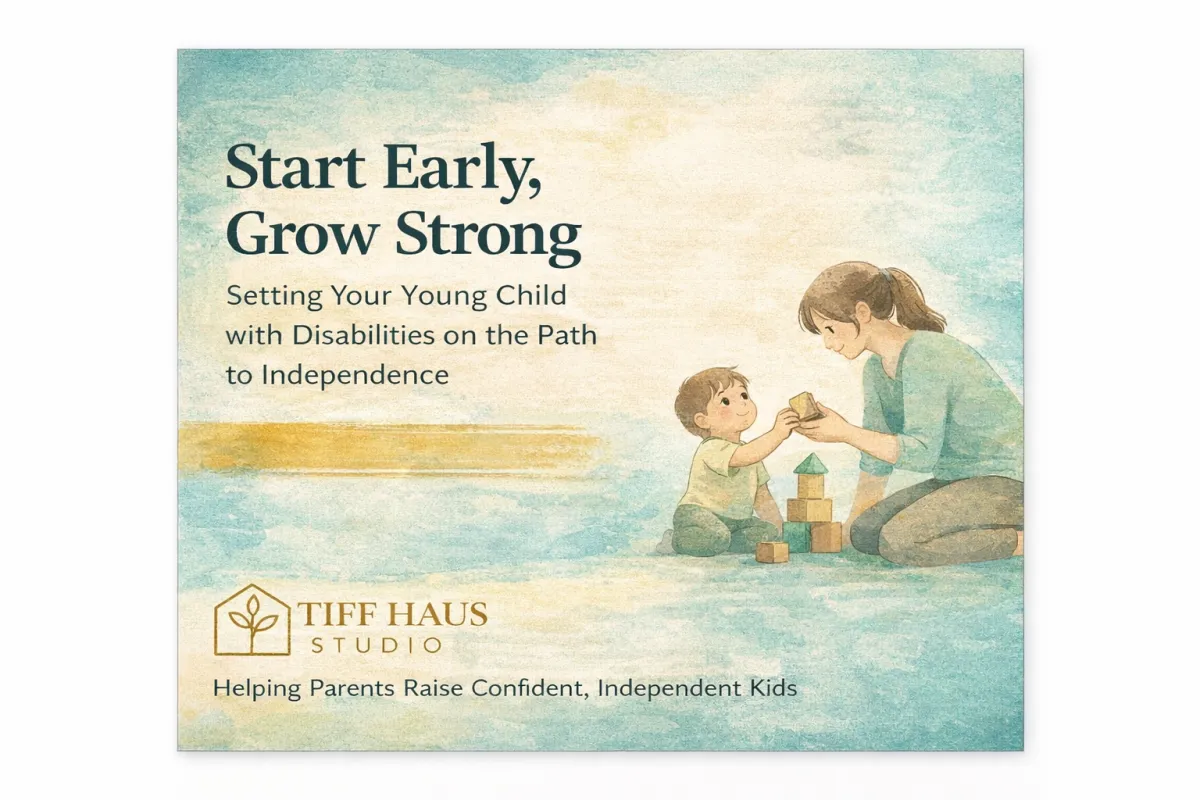
Start Early, Grow Strong: How to Set Your Child with Disabilities Up for Independence
If you’re raising a young child with autism or another developmental disability, you may already find yourself thinking ahead:
“What will their future look like?”
It’s a big question!
And sometimes, it can feel overwhelming.
But here’s something important to hold onto:
You don’t have to have it all figured out right now.
Because independence isn’t something that suddenly happens in the teenage years or adulthood.
It’s something that is built slowly, intentionally, and consistently,,, starting in childhood.
Why Starting Early Matters
The early years are where the foundation is built.
Not only for learning, but for:
Confidence
Problem-solving
Communication
Daily living skills
These are the building blocks of independence.
And the earlier your child is exposed to them, the more natural they become over time!
What Independence Really Means
Let’s clear something up:
Independence does not mean doing everything alone.
For many individuals with disabilities, independence looks like:
Making choices
Communicating needs
Participating in daily routines
Having a sense of control over their life
It’s all about progress! It is NOT about perfection.
5 Ways to Start Building Independence Now
You don’t need a perfect plan.
You just need a starting point.
1. Encourage Small Choices Daily
Choice-making is one of the earliest forms of independence.
Start simple:
“Do you want the red shirt or the blue shirt?”
“Apple slices or crackers?”
These small decisions build confidence and communication.
2. Involve Your Child in Daily Routines
Even young children can participate in everyday tasks.
Try:
Putting toys away
Helping set the table
Carrying items to the laundry basket
It may take longer, but it builds ownership and responsibility.
3. Focus on Communication in Any Form
Communication is at the heart of independence.
Whether your child uses:
Words
Gestures
Visual supports
AAC devices
The goal is the same:
Helping them express their needs, wants, and feelings.
4. Allow Time for Problem-Solving
It can be tempting to jump in and fix things quickly.
But learning happens in the pause.
Give your child space to:
Try
Struggle a little
Figure things out
That’s where confidence grows.
5. Build Consistent Routines
Routines create predictability.
And predictability creates confidence.
When children know what to expect, they are more likely to:
Participate
Engage
Try new skills
What This Looks Like Over Time
These small moments add up.
A child who:
Chooses between two snacks
Helps clean up toys
Communicates a need
Becomes a teen who:
Advocates for themselves
Manages parts of their day
Builds real-world skills
And eventually…
An adult who participates in their life in meaningful ways.
A Mindset Shift for Parents
This part matters just as much as the strategies.
Instead of asking:
“Are they ready for this?”
Try asking:
“How can I give them the opportunity to try?”
Because independence is built by doing—one small step at a time.
Final Thought 💛
You are not behind.
You are not missing your window.
Every small moment you create today is shaping your child’s future.
Independence doesn’t happen all at once.
It’s built in:
Daily routines
Small choices
Gentle encouragement
Consistent support
And it starts earlier than you think.
✨ Not sure where to start or what to prioritize for your child?
Let’s create a simple, realistic plan together.
Schedule your free 20-minute clarity call and take the first step toward building independence with confidence!