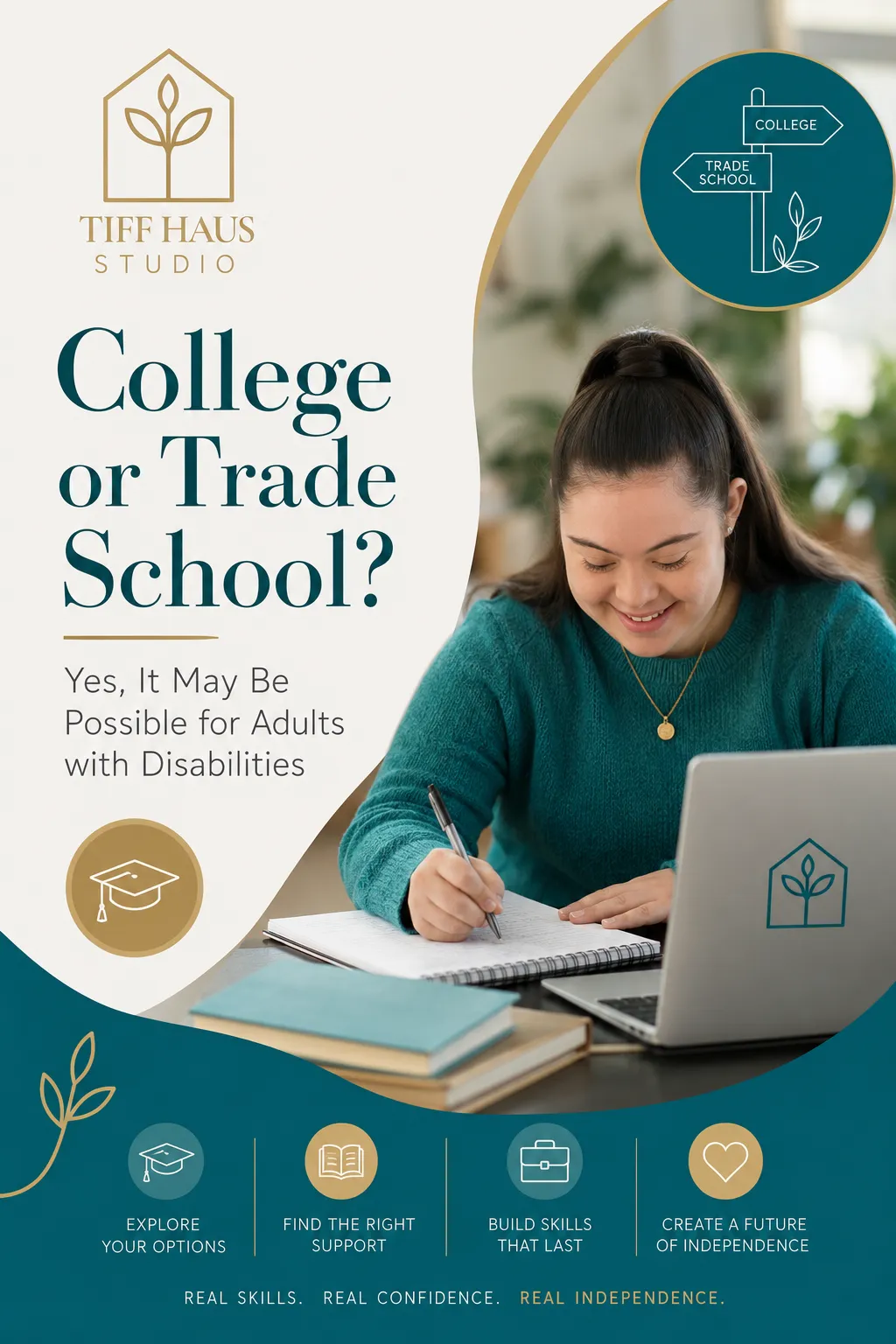
College or Trade School for Adults with Disabilities: A Guide for Families
When many families think about life after high school for a loved one with autism, Down syndrome, intellectual disabilities, or other developmental disabilities, college is often crossed off the list before anyone even explores the options.
The truth is that college or trade school may absolutely be possible.
Success doesn't always mean earning a traditional four year degree. It might mean taking a single class, earning a certificate, learning a trade, building confidence, developing friendships, or gaining skills that lead directly to employment and greater independence.
At Tiff Haus Studio, we encourage families to think beyond what has always been expected. There are more opportunities today than ever before.
What Types of Schools Should You Consider?
There isn't just one path after high school.
Depending on the individual's strengths, interests, and support needs, options may include:
Community Colleges
Many community colleges offer:
Certificate programs
Career and technical education
Continuing education classes
Adult education
Disability support services
Smaller class sizes
Students may take one class at a time while learning to navigate a college campus independently.
Trade Schools
Trade schools focus on hands on careers such as:
Culinary arts
Automotive technology
Welding
HVAC
Construction
Cosmetology
Graphic design
Medical assisting
Veterinary assisting
Computer technology
Many trade programs allow students to learn through doing rather than sitting through long academic lectures.
Inclusive Postsecondary Education Programs
Across the United States, more colleges now offer programs specifically designed for students with intellectual and developmental disabilities.
These programs often combine:
Academic classes
Independent living skills
Social opportunities
Employment experiences
Campus life
Job coaching
Students participate in college life while receiving the supports they need to be successful.
Does My Loved One Have to Be "College Material"?
Absolutely not!
One of the biggest misconceptions is that someone must have perfect grades or high test scores to continue learning after high school.
Instead, ask questions like:
What are they interested in?
What skills do they enjoy practicing?
Do they learn better by doing?
What career goals do they have?
What level of support helps them succeed?
Education should fit the individual, not the other way around.
Supports That May Be Available
Many colleges and trade schools provide accommodations such as:
Note taking assistance
Extended testing time
Quiet testing environments
Priority registration
Assistive technology
Accessible classrooms
Academic coaching
Disability resource centers
Every school is different, so it is worth asking what services are available before making a decision.
Questions Families Should Ask During a Campus Visit
If you're touring a college or trade school, consider asking:
What disability support services are available?
How does a student request accommodations?
Are tutors available?
Is there help with organization and time management?
Are there internship opportunities?
What career placement services are offered?
Can students start part time?
Are there social clubs and campus activities?
Is transportation available?
Are there job coaches or peer mentors?
The answers can help determine whether a school is a good fit.
Skills That Help Students Succeed
Academic ability is only one part of college success.
Students also benefit from developing independence in areas such as:
Time management
Self advocacy
Personal hygiene
Organization
Money management
Transportation
Communication
Problem solving
Self care
These everyday life skills often become just as important as classroom learning.
Independence Starts Before College
Preparing for higher education begins long before the first day of class.
Families can begin practicing:
Following a daily schedule
Using calendars and reminders
Managing assignments
Ordering food independently
Communicating with instructors
Taking responsibility for personal belongings
Using public transportation when appropriate
Asking for help when needed
Each small success builds confidence for bigger opportunities later.
Every Journey Looks Different
Some students will earn certificates.
Some will complete trade programs.
Some will attend community college.
Some may take one class simply because they enjoy learning.
Every one of those paths is valuable.
The goal isn't to compare your loved one to someone else's journey. The goal is helping them build a life that is meaningful, fulfilling, and as independent as possible.
How Tiff Haus Studio Can Help
Planning for adulthood can feel overwhelming, but you don't have to figure it out alone.
At Tiff Haus Studio, we help individuals and families create personalized independence plans that build the real life skills needed for adulthood. Whether your loved one hopes to attend college, learn a trade, live more independently, or prepare for employment, we're here to help you identify the next steps with confidence.
Schedule a FREE Clarity Call to begin building a personalized roadmap toward greater independence.