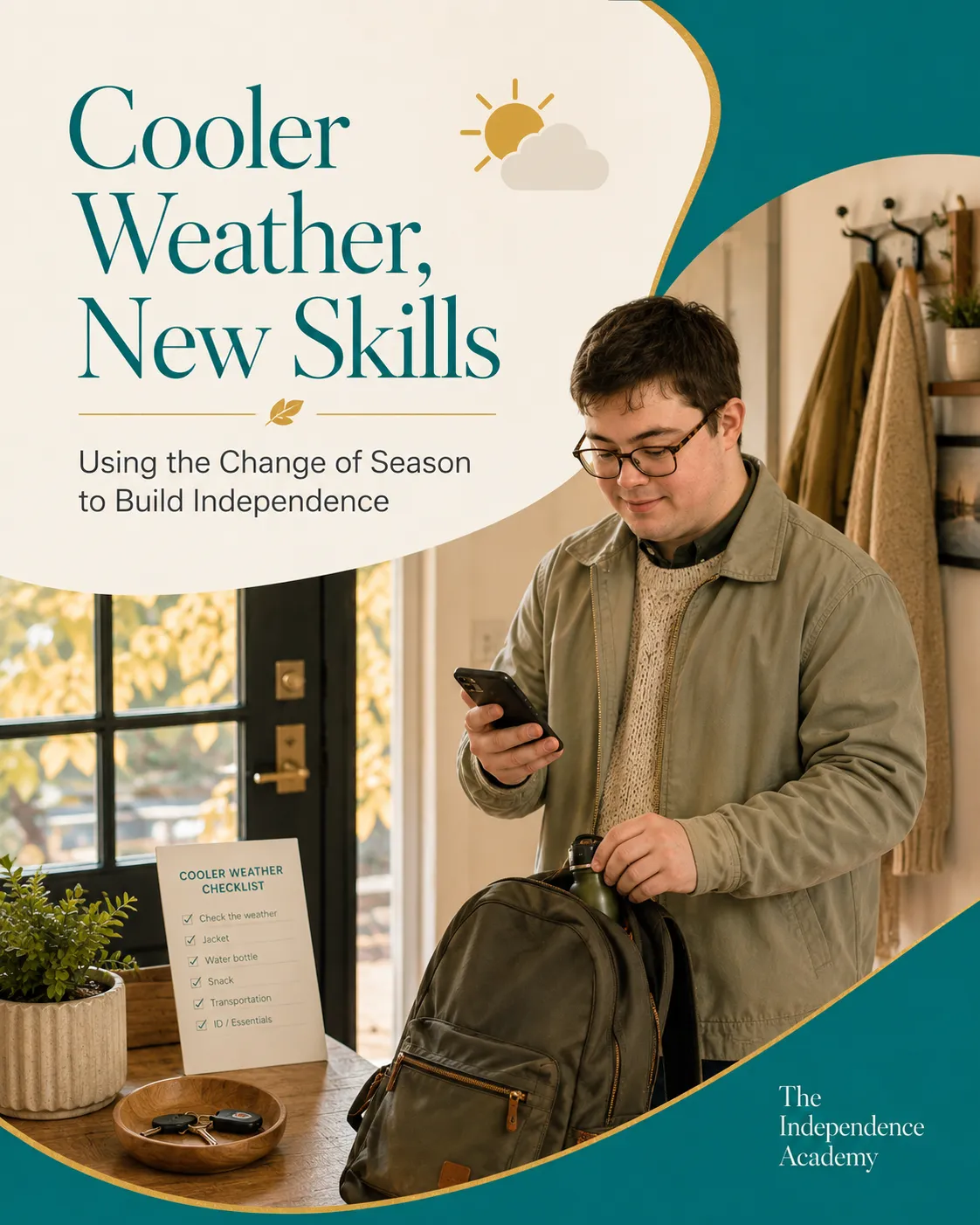
Cooler Weather, New Skills: Using the Change of Season to Build Independence
Cooler temperatures are on the way, bringing changes to clothing, routines, activities, and household responsibilities.
For individuals with intellectual and developmental disabilities, seasonal changes can also create natural opportunities to practice everyday independence skills. Choosing the right clothing, checking the weather, preparing for an outing, and helping with simple fall tasks are practical skills that can be practiced throughout the season.
The goal is not to master everything at once. Choose one or two skills that are useful for your family and build from there.
1. Practice Checking the Weather
Weather apps can be confusing because they include temperatures, percentages, hourly forecasts, wind speeds, and unfamiliar symbols.
Start with the information your child needs most:
Is it hot, warm, cool, or cold?
Is it sunny, windy, or raining?
Will the temperature change later?
Do I need a jacket?
Check the forecast together at the same time each day. You might make it part of the morning routine before getting dressed.
Ask simple questions such as:
“What does the weather look like today?”
“Will it be cooler tonight?”
“What should you bring with you?”
With practice, checking the weather can become a useful habit rather than something a parent always manages.
2. Learn How to Dress for Cooler Temperatures
Choosing clothing for changing temperatures can be challenging. A cool morning may turn into a warm afternoon, especially during the early fall months.
Teach your child to think about clothing in simple categories:
Hot weather: shorts, lightweight shirt, sandals
Mild weather: pants, short sleeves, optional light layer
Cool weather: pants, long sleeves, sweater or light jacket
Cold or rainy weather: warm coat, closed toe shoes, umbrella or rain jacket
If making a decision feels overwhelming, offer two appropriate choices. For example:
“It will be cool today. Would you like to wear the gray sweatshirt or the blue jacket?”
You can also place a small weather guide near the closet with pictures of clothing that matches different temperatures.
3. Practice Using Layers
Layering is a helpful skill because temperatures often change throughout the day.
Practice putting on and removing sweatshirts, sweaters, and jackets. Make sure your child can manage any buttons, zippers, or snaps. If a fastener is difficult, consider clothing with an easier closure.
Talk about where to put a jacket after taking it off. Should it go in a backpack, around the waist, over a chair, or on a designated hook?
Remembering to bring the jacket home is part of the skill too. Try creating a simple “before I leave” checklist:
Phone
Wallet
Keys
Backpack
Jacket
4. Create a Cooler Weather Routine
Seasonal changes can affect daily routines. It may get dark earlier, outdoor activities may happen at different times, and extra steps may be needed before leaving home.
A simple visual routine can make these changes easier to understand.
For example, an evening routine might include:
Come home
Hang up jacket
Put shoes away
Complete afternoon responsibilities
Check tomorrow’s weather
Choose clothing for the next day
Introduce new routines gradually and practice them consistently. Predictable steps can reduce stress and help the person complete more of the routine independently.
5. Teach Seasonal Home Skills
Fall brings plenty of opportunities to participate in household tasks.
Depending on the person’s abilities and support needs, they might practice:
Folding and putting away blankets
Changing bedding
Sorting warmer clothing
Hanging jackets on hooks or hangers
Sweeping leaves from a patio
Bringing outdoor items inside
Helping prepare soup or another simple meal
Making a warm drink safely
Checking that doors and windows are closed
Replacing batteries in a flashlight with assistance
Choose tasks that are meaningful in your home. Break each task into small steps and teach one step at a time.
6. Review Safety as the Days Become Shorter
As daylight hours change, your child may be walking, waiting for transportation, or returning home when it is darker outside.
Review practical safety skills such as:
Staying in well lit areas
Wearing light colored or reflective clothing
Carrying a charged phone
Knowing who to call for help
Watching carefully for vehicles
Using sidewalks and marked crosswalks
Carrying a small flashlight
Sharing changes in plans with a trusted person
Practice these skills before they are needed. You can walk a familiar route together at dusk and talk about what looks different when there is less light.
7. Prepare for Seasonal Sensory Changes
Cooler weather can introduce new sensory experiences. Jackets may feel heavy. Sweaters may feel itchy. Wind can be uncomfortable. Seasonal smells, holiday decorations, and changes in daylight may also affect comfort and regulation.
Let your child try on cooler weather clothing at home before it becomes necessary. Remove irritating tags, explore softer fabrics, and look for layers that provide warmth without feeling restrictive.
Whenever possible, include the person in choosing clothing and seasonal items. Comfort matters, and a person is more likely to use an item they helped select.
8. Plan a Fall Activity
Community outings provide opportunities to practice several independence skills at once.
Consider planning a trip to:
A pumpkin patch
A farmers market
A fall festival
A park
A coffee shop
A grocery store to purchase ingredients for a seasonal recipe
A neighborhood event
A library program
Before leaving, involve your child in checking the weather, choosing clothing, packing needed items, reviewing the plan, and deciding what to purchase or do.
Afterward, talk about what went well and what they would like to do differently next time.
Start With One Seasonal Skill
You do not need to create an entire fall curriculum at home.
Choose one practical skill that would make daily life a little easier. Practice it regularly, provide the support your child needs, and reduce that support gradually as confidence grows.
A small goal might be:
“This week, my child will check the weather each morning.”
“This month, my child will practice choosing an appropriate jacket.”
“My child will use a checklist to remember personal belongings.”
“My child will help prepare one warm meal.”
Seasonal changes happen every year, giving families repeated opportunities to practice, learn, and build confidence.
At Tiff Haus Studio, we help individuals with disabilities develop practical skills for everyday life through clear instruction, supportive tools, and practice that meets them where they are.
I created a new tool for you and your family... I am launching The Tiff Haus Independence Academy! I am SO excited - The Academy includes step by step lessons, interactive workbooks, skill cards, progress trackers, live sessions, and support guides for parents and caregivers. Schedule your FREE Clarity Call to see if The Academy would be a good fit!
Because every season can bring a new opportunity to grow!