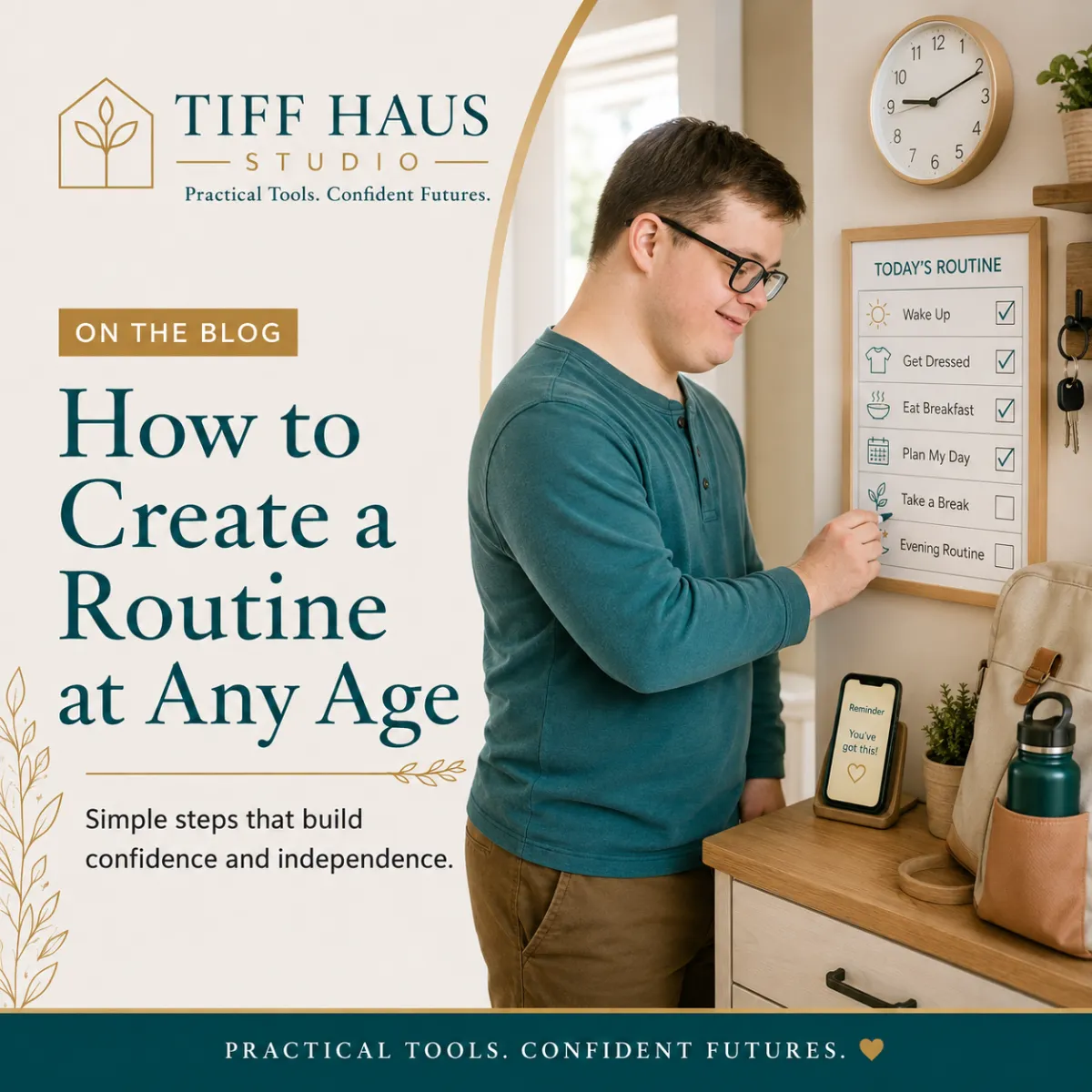
How to Create a Routine at Any Age
Routines are not only for young children or busy families. They can help people of every age understand what comes next, remember important responsibilities, and feel more confident completing everyday tasks.
For individuals with intellectual and developmental disabilities, a clear routine can be especially valuable. It can turn a day that feels confusing or overwhelming into one that feels more predictable and manageable.
Whether someone is learning a morning routine at age 8, managing work responsibilities at age 25, or creating a healthier evening routine at age 50, it is never too early or too late to begin.
The goal is not to plan every minute or expect perfection. A helpful routine creates enough structure to support success while still allowing room for real life.
What Is a Routine?
A routine is a group of actions completed in a familiar order. It helps a person know what to do, when to do it, and what comes next.
A routine might include:
Getting ready in the morning
Taking medication
Preparing for school or work
Completing household chores
Exercising or moving the body
Getting ready for bed
Planning meals or making a grocery list
Some routines happen every day. Others may happen only on certain days, such as doing laundry on Saturday or preparing a work bag on Sunday evening.
Why Are Routines Important?
Routines reduce the number of decisions a person must make throughout the day. When the next step is familiar, less mental energy is needed to begin and complete a task.
A consistent routine can help:
Reduce stress and uncertainty
Strengthen memory and organization
Make transitions easier
Increase participation in daily tasks
Build confidence through repeated success
Support healthier sleep, hygiene, nutrition, and movement
Encourage greater independence at home, school, work, and in the community
For a person who depends on frequent reminders, a visual or written routine can also shift some responsibility away from the parent, caregiver, teacher, or support professional.
Instead of repeatedly saying, “What are you supposed to do next?” the support person can gently redirect the individual to the routine.
That small change helps the routine become the guide, rather than another person.
Can You Create a New Routine at Any Age?
Yes! People can learn and benefit from new routines at any age.
The routine may need to be adapted to the person’s learning style, communication needs, physical abilities, responsibilities, and current level of independence.
A young child may use photographs or picture cards. A teenager might prefer a checklist on the bathroom mirror. An adult may use phone alarms, a calendar, or a task-management app.
The format should feel useful and age-respectful, not childish or overly complicated.
The most effective routine is not necessarily the prettiest or most detailed one. It is the one the person can understand and will actually use.
How to Create a Routine in 7 Simple Steps
1. Choose One Part of the Day
Start small. Do not try to organize an entire day at once.
Choose one routine that would make daily life easier, such as:
A morning routine
An after-school routine
A getting-ready-for-work routine
A bedtime routine
A weekly laundry routine
Beginning with one routine makes it easier to identify what works before adding more.
2. Decide What Success Looks Like
Be specific about the purpose of the routine.
“Be more responsible” is too broad. “Pack a lunch and work badge before bed” is clear and measurable.
Ask:
What should this routine help the person accomplish?
Which parts can the person already do?
Where are reminders or additional support usually needed?
Build from the person’s current strengths rather than focusing only on what is difficult.
3. Break the Routine Into Small Steps
Write down each action in the order it should happen. Avoid combining several tasks into one vague direction.
Instead of writing “Get ready,” try:
Use the bathroom.
Brush your teeth.
Put on deodorant.
Get dressed.
Put your pajamas in the hamper.
Eat breakfast.
Get your backpack or work bag.
Each step should be clear enough that the person knows exactly what to do.
4. Choose the Right Type of Support
Different people need different kinds of reminders.
Helpful supports may include:
A written checklist
Photos of the actual items or locations
Simple icons or picture cards
A dry-erase board
A timer
Phone alarms or calendar reminders
A checklist placed inside a cabinet, closet, or work bag
A short video showing the routine
When possible, let the person help choose the format. People are more likely to use a tool that fits their preferences.
5. Practice During a Calm Time
Do not introduce a new routine for the first time when everyone is rushed, tired, or already frustrated.
Walk through the steps together when there is enough time to pause, answer questions, and make corrections.
Demonstrate unfamiliar steps and then allow the person to try. Offer only as much help as is truly needed.
6. Repeat the Routine Consistently
Repetition helps a sequence become familiar.
Try to begin the routine at approximately the same time or connect it to something that already happens.
For example:
Brush your teeth after breakfast.
Check your work bag before putting on your shoes.
Take evening medication after dinner.
Begin the bedtime routine when a phone alarm sounds.
Connecting a new action to an established habit can make it easier to remember.
7. Review and Adjust
If a routine is not working, that does not mean the person has failed. The routine may simply need to change.
Ask:
Are there too many steps?
Is the wording clear?
Is the routine posted where it is needed?
Does the person need pictures, alarms, or a timer?
Is there enough time to complete it?
Is one step especially difficult?
Does the order make sense to the person using it?
Adjusting a routine is part of the process. A good routine should support the individual, not create another source of pressure.
How Can Parents and Caregivers Encourage Independence?
It can be tempting to step in quickly, especially when a task would be faster if you completed it yourself.
However, routines become independence-building tools only when the individual has opportunities to participate.
Try using the least amount of help needed:
Wait briefly to give the person time to begin.
Point to the checklist or visual.
Give a short verbal reminder.
Demonstrate the step.
Provide hands-on assistance only when necessary.
Over time, begin reducing prompts that are no longer needed.
The goal is progress, not a perfectly completed routine on the first try.
What If the Person Resists the Routine?
Resistance is often useful information. The routine may feel too long, too difficult, too controlling, or disconnected from something meaningful to the person.
Look for ways to increase choice and ownership.
Let the individual choose the order of two flexible tasks, select the checklist design, choose the reminder sound, or decide when a weekly task will happen.
It can also help to include something enjoyable after the routine is completed. This is not always a reward. Sometimes it is simply the natural next part of the day.
For example, after getting ready for bed, there may be time to read, listen to music, or watch a favorite show.
Tiff’s Tip
Create the routine with the person, not only for the person.
Even small choices build ownership. Ask, “What would help you remember?” or “Would you rather use pictures, a checklist, or phone reminders?”
A routine is more likely to last when the individual has a voice in how it works.
Frequently Asked Questions About Creating Routines
How long does it take for a routine to become a habit?
There is no single timeline that works for everyone. The amount of time needed depends on the complexity of the routine, how often it is practiced, and the type of support the person needs.
Focus on consistent practice and gradual progress rather than a specific number of days.
How many steps should a routine include?
Use the fewest steps needed to make the task clear.
A person learning a new skill may need each action listed separately. As the routine becomes familiar, several small steps may be combined.
Should every routine use a visual schedule?
No. Visual schedules are helpful for many people, but others may prefer written lists, alarms, calendars, or verbal reminders.
Match the tool to the individual’s needs and preferences.
What should I do when the routine is interrupted?
Teach flexibility as part of the routine.
Use simple language such as, “The plan changed, so we are doing this step next.”
A backup plan or “change” card may help someone who finds unexpected transitions difficult.
Can routines support adult independence?
Yes. Routines can help adults manage hygiene, transportation, medication, meals, household responsibilities, work preparation, appointments, and leisure time.
They are practical tools for reducing dependence on repeated reminders.
Small Routines Can Lead to Big Changes
Independence is rarely built through one large accomplishment. More often, it develops through small skills practiced again and again.
A morning checklist may lead to getting ready with fewer reminders. A weekly laundry routine may lead to taking greater responsibility at home. A phone alarm may help an adult arrive at work prepared and on time.
Start with one part of the day. Keep the steps clear. Use support that fits the individual. Celebrate progress, adjust when needed, and remember that learning a new routine is possible at any age.
At Tiff Haus Studio, we help individuals with intellectual and developmental disabilities and their families build practical skills for everyday life.
If you would like help identifying the next steps toward greater independence, if you could use someone to talk through your routine, or need some help figuring out how to motivate your child, schedule a free 20-minute Clarity Call with Tiff Haus Studio.