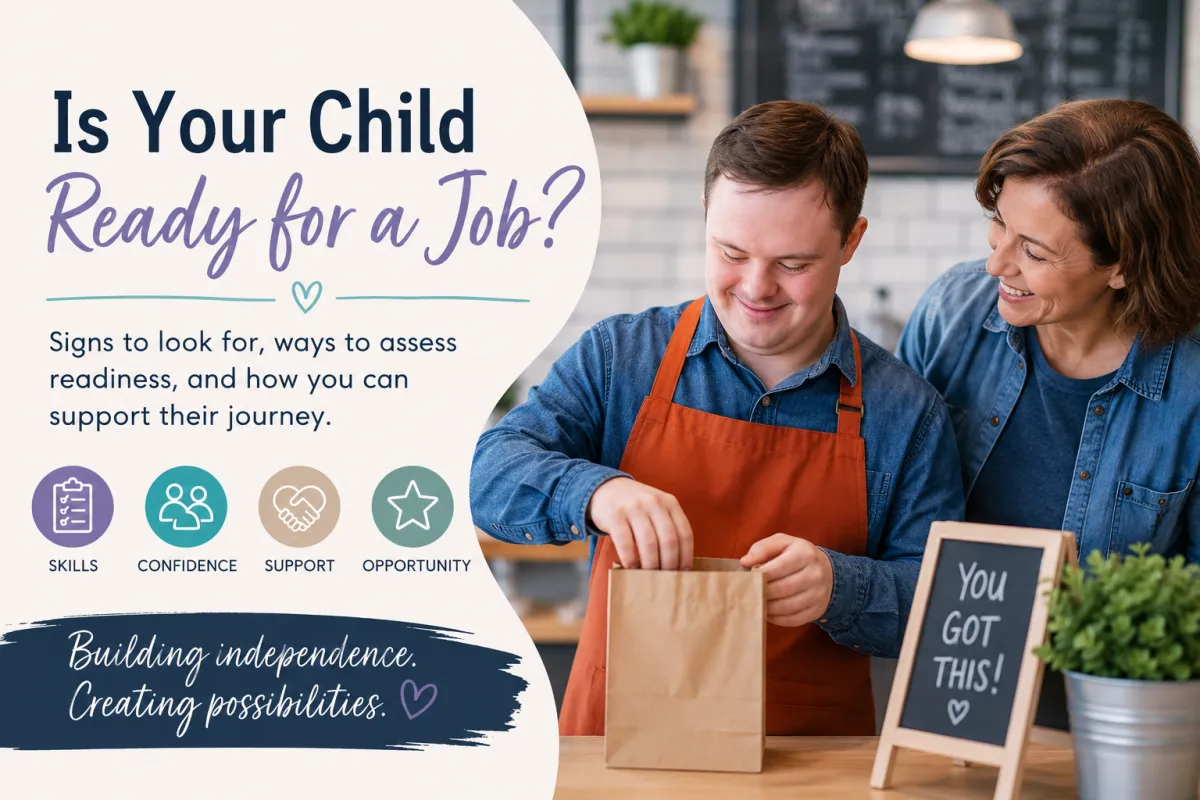
How Parents Can Tell if Their Child With Disabilities Is Ready for a Job
For many parents of individuals with intellectual and developmental disabilities, employment can feel exciting and overwhelming at the same time. You might wonder if your child is truly ready, whether a workplace will understand their needs, or how much support they may need to succeed.
The truth is, job readiness does not look the same for everyone. Some individuals are ready for paid employment earlier than expected. Others may need more time, practice, or support before stepping into a work environment. Readiness is about having a foundation of skills, motivation, and support that can continue growing over time.
At Tiff Haus Studio, we believe employment can be an incredible step toward confidence, independence, social connection, and purpose. The key is finding the right fit and helping individuals build skills at a pace that works for them!
Signs Your Child May Be Ready for a Job
Every individual is different, but there are common signs that may indicate your child is ready to begin exploring employment opportunities.
They Show Interest in Working
One of the biggest indicators is simple curiosity. Your child may:
Ask questions about jobs
Talk about wanting their own money
Show interest in certain businesses or activities
Enjoy helping others
Want more independence or responsibility
Motivation matters more than perfection.
They Can Follow Basic Instructions
Most jobs require individuals to follow simple directions, complete tasks in order, and respond to guidance from supervisors.
This does not mean they need to work independently all the time. Many successful employees with disabilities benefit from visual supports, reminders, or job coaching.
They Can Handle Simple Routines
Jobs involve repetition and consistency. Signs of readiness may include:
Following a morning routine
Completing chores at home
Remembering steps in familiar activities
Transitioning between activities with support
Consistency in daily life often translates well into workplace skills.
They Can Communicate Basic Needs
Communication does not have to be verbal to be effective. What matters is whether the individual can:
Ask for help
Express discomfort or confusion
Respond to simple questions
Communicate preferences or needs
Communication tools, visual supports, AAC devices, or prompts can absolutely be part of workplace success.
They Show Responsibility
This can look like:
Arriving on time to activities
Taking care of belongings
Completing assigned tasks
Following household expectations
Understanding simple rules
Responsibility develops over time and can continue improving through employment experiences.
They Enjoy Being Around Others
Many jobs involve interacting with coworkers, customers, or supervisors. A willingness to engage socially, even in small ways, can be a positive sign.
That said, not every job requires constant social interaction. Some individuals thrive in quieter, structured work environments.
Questions Parents Can Ask Themselves
If you are unsure whether your child is ready for employment, ask yourself these questions:
Can they stay focused on a task for at least 15–30 minutes?
Can they follow a simple multi-step direction?
How do they respond to correction or feedback?
Can they handle transitions reasonably well?
Do they show pride after completing responsibilities?
Are they interested in earning money or gaining independence?
Can they tolerate being away from home for a few hours?
What environments help them succeed?
What support systems would help them thrive?
The goal is not to answer “yes” to every question. The goal is identifying strengths and areas that may need more support.
Ways to Assess Job Readiness at Home
Parents do not need formal testing to begin evaluating readiness for work. Some of the best assessments happen naturally in everyday life.
Observe Household Responsibilities
Chores can reveal a lot about work readiness. Watch how your child handles:
Following instructions
Completing tasks
Staying on schedule
Managing frustration
Working independently
Asking for help appropriately
Even simple tasks like folding laundry, organizing groceries, or wiping tables build transferable job skills.
Practice Real-Life Responsibilities
Create opportunities for responsibility such as:
Managing a small shopping list
Ordering food independently
Helping with family errands
Following a visual checklist
Volunteering in the community
These experiences build confidence while helping parents identify support needs.
Explore Volunteer Opportunities
Volunteering can be an excellent stepping stone before paid employment. It allows individuals to:
Experience workplace expectations
Practice communication skills
Build stamina and routines
Learn about personal interests
Gain confidence in new environments
Volunteer experiences also help families identify which types of jobs may be a good fit.
Try Short-Term or Supported Work Experiences
Some individuals benefit from:
Job shadowing
Internship programs
School transition programs
Supported employment services
Vocational rehabilitation services
Work-based learning opportunities
These experiences provide valuable feedback about strengths, challenges, and support needs.
Remember: Readiness Is a Process
One of the biggest misconceptions about employment is that someone is either “ready” or “not ready.” In reality, job readiness develops over time.
Employment itself often teaches:
Confidence
Communication
Responsibility
Time management
Problem-solving
Social skills
Independence
Sometimes individuals become more capable because they are given the opportunity to try.
What Parents Can Do Right Now
If employment feels like a future goal but not an immediate step, there is still so much you can do today.
Focus on:
Building routines
Encouraging responsibility
Teaching self-advocacy
Practicing communication
Increasing independence at home
Exploring interests and strengths
Creating opportunities for real-world experiences
Small skills practiced consistently can lead to major growth over time!
Final Thoughts
Your child does not need to have every skill mastered before exploring employment. They simply need opportunities, support, encouragement, and a chance to grow.
The right job can provide so much more than a paycheck. It can create confidence, purpose, friendships, structure, and pride.
At Tiff Haus Studio, we believe every individual deserves the opportunity to build a meaningful and independent life at their own pace. Employment can be one important step on that journey! Let's explore what this might look like for your child - Schedule a FREE Clarity Call today!