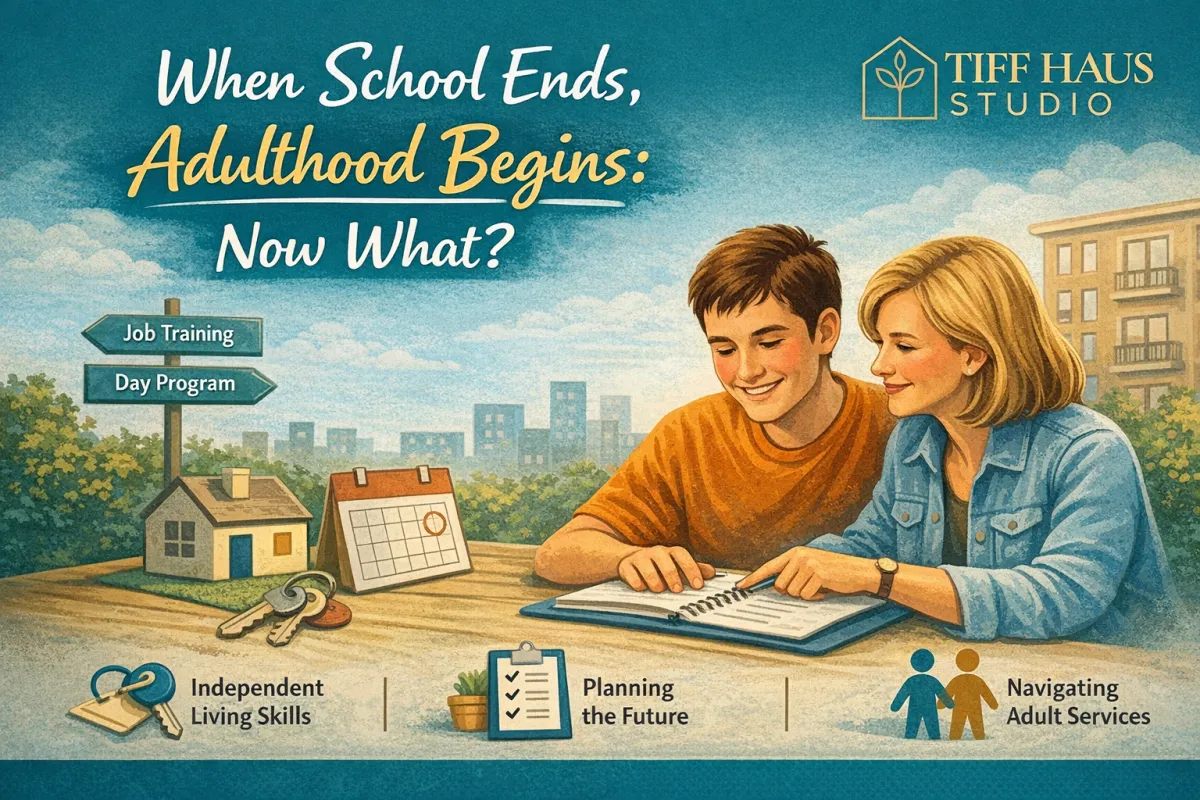
What Happens When School Services End? A Guide for Parents of Adults with Autism and Developmental Disabilities
For many families, the day their child turns 22 doesn’t feel like a celebration.
It feels like a cliff.
For years, school provided structure, therapies, social opportunities, and a clear roadmap. Then suddenly, it ends. No more IEP meetings. No more built-in services. No more automatic support system.
If you are a parent of an adult child with autism or intellectual and developmental disabilities, you are not alone in asking:
What happens now?
Where do we even start?
How do I make sure my child doesn’t lose skills?
What does adulthood actually look like for them?
Let’s talk about what comes next.
The “Services Cliff” Is Real
When school-based services end (typically between ages 18–22 depending on your state), families often experience:
Loss of routine and daily structure
Social isolation
Regression in skills
Increased anxiety (for both parent and adult child)
Overwhelm from navigating adult systems
The shift from a structured educational environment to adult services is one of the biggest transitions your family will face.
But here’s the good news:
Adulthood doesn’t mean services disappear. It means the system changes.
And with the right plan, this stage can be empowering, not scary.
Step 1: Shift the Goal From “Support” to “Independence”
In childhood, the focus is often protection and accommodation.
In adulthood, the focus needs to become:
Skill building. Confidence building. Real-world readiness.
That doesn’t mean pushing too fast or expecting unrealistic independence. It means asking:
What can my adult child learn next?
What daily living skills can we build?
Where can they safely practice responsibility?
What decisions can they begin making on their own?
Even small skills - doing laundry independently, ordering at a restaurant, managing a simple budget - build dignity and self-worth.
Step 2: Explore Adult Day Programs, Vocational Training & Community Options
Adult services may include:
Day habilitation programs
Supported employment
Vocational training
Community integration programs
Life skills classes
Independent or supported living programs
Every state offers different options, and navigating funding systems (like Medicaid waivers) can feel overwhelming.
This is where guidance becomes invaluable. Having someone help you understand what’s available, what fits your child’s personality, and what builds toward independence can make all the difference.
Step 3: Build Real-Life Skills at Home
Here’s something many parents don’t hear enough:
You don’t have to wait for a program to start teaching independence.
Home is the first independent living classroom.
Start with:
Helping you cook one meal per week
Creating a personal calendar
Handling small purchases with cash or debit
Practicing transportation safety
Learning to advocate for themselves in small situations
Consistency matters more than perfection.
And progress is often slower than we expect, but it compounds beautifully over time.
Step 4: Plan for the Long Term
Hard conversation, but necessary:
Who will advocate for your adult child long-term?
What does housing look like in 5–10 years?
Is guardianship appropriate, or are there supported decision-making alternatives?
What financial planning has been put in place?
Planning ahead is an act of love, not pessimism.
The earlier you start mapping it out, the more options you preserve.
You Don’t Have to Figure This Out Alone
If you are feeling overwhelmed, behind, or unsure where to begin, that is completely normal.
Many parents spend years focused on therapies and school services, and then adulthood arrives without a clear roadmap.
That’s exactly why I created Tiff Haus Studio.
My heart is helping families move from confusion to clarity. From fear to a step-by-step plan. From “What now?” to “We’ve got this.”
If you are navigating life after high school for your adult child with autism or developmental disabilities, I invite you to schedule a free 20-minute clarity call.
Let’s talk about where you are, and where your child can go next.
Because adulthood can be meaningful, purposeful, and independent.
With the right support, it absolutely can be!