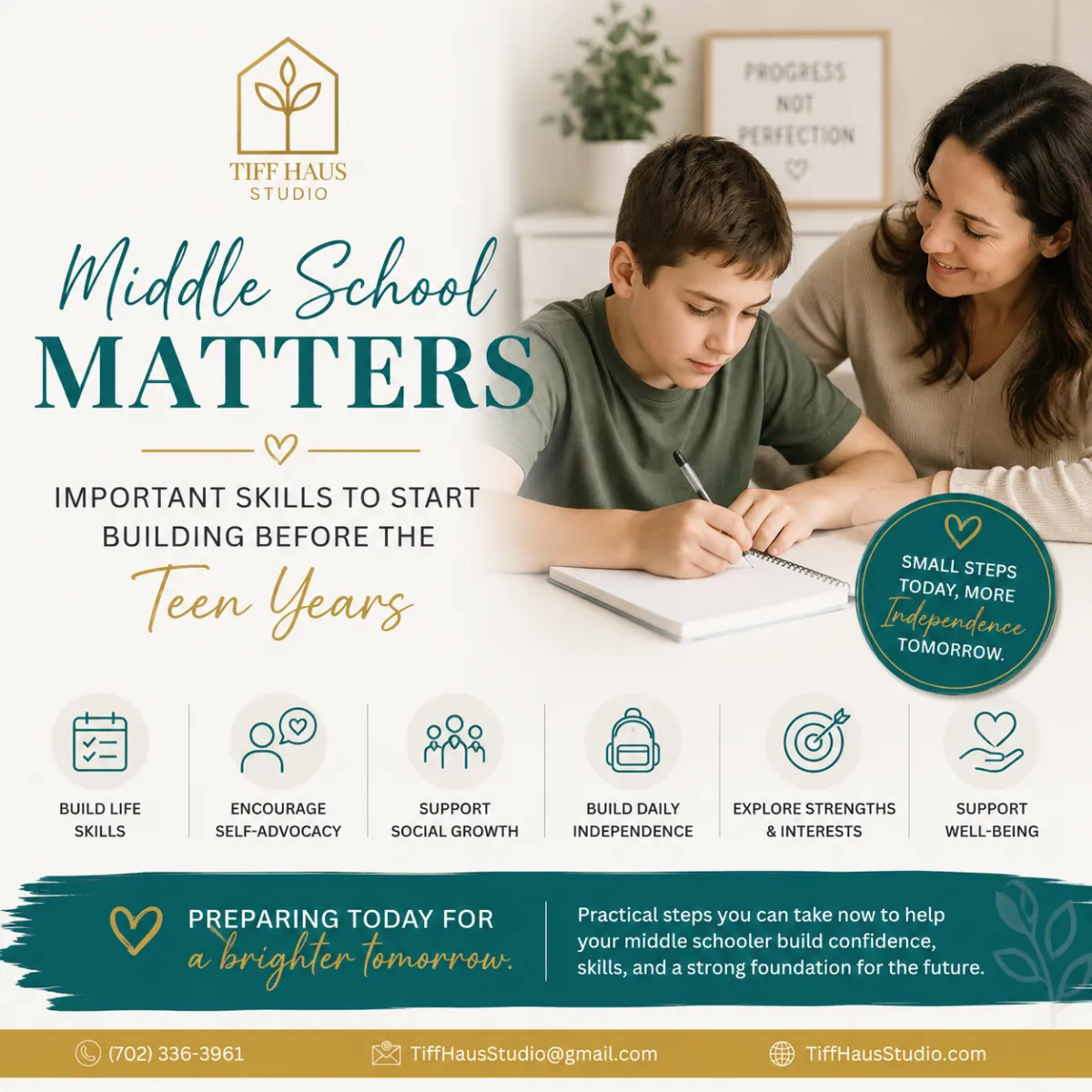
Middle School Matters: Important Skills to Start Building Before the Teen Years
Middle school can be a big transition for both kids and parents.
Routines begin changing. Expectations grow. Social dynamics become more complicated. Independence starts becoming more important in everyday life.
For families of children with intellectual and developmental disabilities, these years can feel especially uncertain.
The good news is: middle school is also a powerful time to begin building confidence, life skills, and independence in small, meaningful ways.
At Tiff Haus Studio, we believe growth happens step by step, and middle school is often where those important foundations begin!
1. Focus on Life Skills, Not Just Academics
Academics matter, but middle school is also a great time to start strengthening everyday life skills.
This might include:
Following routines independently
Managing hygiene tasks
Packing a backpack
Using a planner or calendar
Helping with household chores
Learning basic money skills
These small responsibilities help build confidence over time.
2. Encourage Self-Advocacy
Middle school is often when students begin becoming more aware of their strengths, challenges, and preferences.
This is a great time to encourage:
Asking for help when needed
Expressing opinions respectfully
Making simple choices independently
Participating in conversations about goals
Self-advocacy does not need to start perfectly. Small opportunities to practice can make a big difference later.
3. Start Preparing for Increased Social Pressure
Social relationships often become more complicated during the middle school years.
Some students may struggle with:
Friendships
Feeling left out
Peer pressure
Social communication
Understanding social expectations
Parents can help by:
Practicing social scenarios at home
Encouraging structured social opportunities
Talking openly about emotions and friendships
Supporting healthy boundaries
The goal is not to eliminate every challenge. The goal is helping your child feel supported and prepared.
4. Build Independence Into Everyday Routines
Independence grows through repetition and consistency.
Middle schoolers can begin helping with:
Laundry
Preparing simple snacks or meals
Organizing personal items
Managing bedtime and morning routines
Completing small responsibilities without reminders
Even small steps help build important long-term skills.
5. Begin Thinking About the Future Without Pressure
You do not need to have everything figured out during middle school.
But it can be helpful to begin noticing:
Interests
Strengths
Activities your child enjoys
Environments where they feel successful
These observations often become valuable later when families begin transition planning in high school.
6. Protect Mental and Emotional Well-Being
Middle school can sometimes impact confidence and self-esteem.
Children with disabilities may become more aware of differences during these years, and that can bring frustration or anxiety.
Parents can help by:
Celebrating progress
Focusing on strengths
Creating safe spaces for communication
Encouraging activities that build confidence
Support and connection matter just as much as skill-building.
7. Remember That Progress Looks Different for Everyone
Every child develops at their own pace.
Independence does not have to happen all at once, and it does not have to look the same for every family.
What matters most is continuing to create opportunities for growth, confidence, and participation in everyday life.
At Tiff Haus Studio, we believe those small moments add up in meaningful ways over time!
Final Thoughts
Middle school is more than a transition between childhood and high school.
It is an opportunity to begin building the routines, confidence, and life skills that support greater independence later on.
And every small step matters.