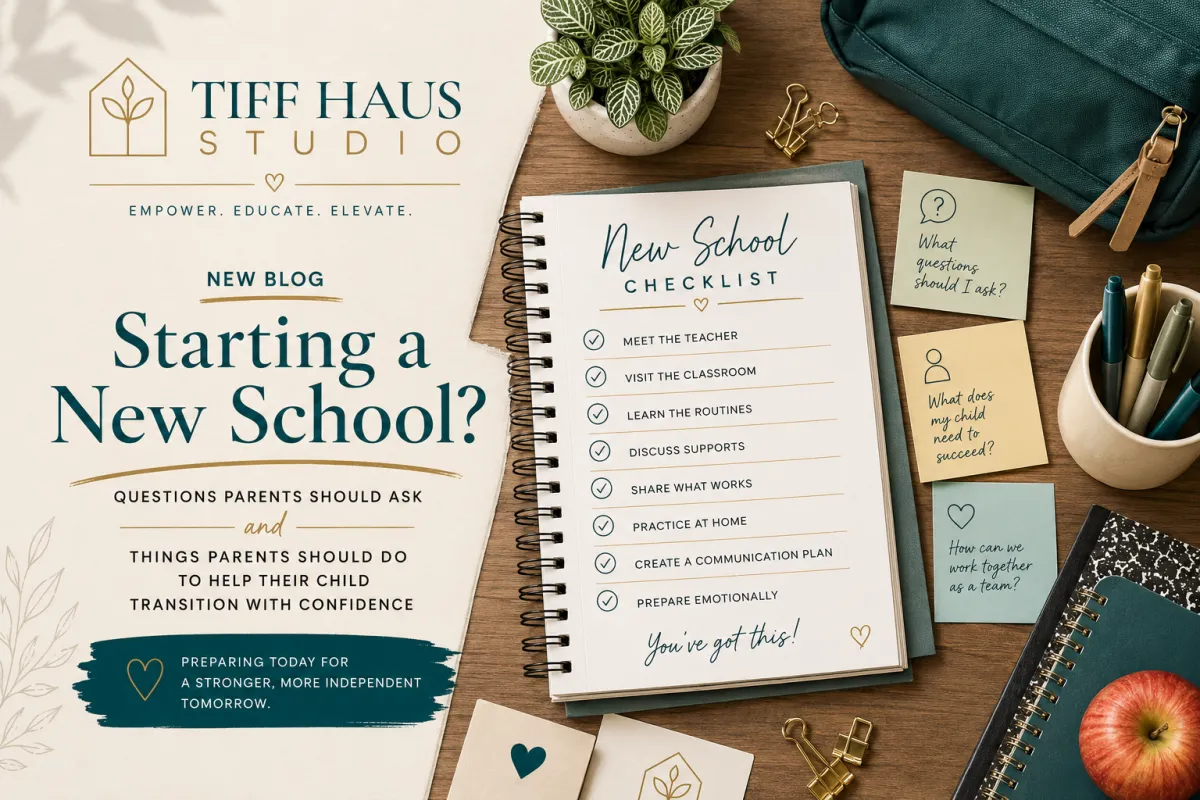
Starting a New School? Questions Every Parent Should Ask and Steps That Make the Transition Easier
Starting at a new school is a major milestone. Whether your child is entering kindergarten, changing schools, transitioning into middle or high school, or beginning an adult transition program, a little preparation can make a big difference.
As parents, we often spend time shopping for backpacks, school supplies, and new clothes. Those things matter, but one of the best investments you can make is preparing for a successful partnership with your child's new school.
Here are some important questions to ask and practical steps you can take before the first day.
Schedule a Meeting Before School Starts
If possible, ask to meet with your child's teacher, case manager, or support staff before the school year begins. This gives everyone an opportunity to get to know each other before the excitement and stress of the first day.
Consider asking:
What does a typical school day look like?
What routines will my child be expected to follow?
How can we practice those routines at home?
What communication method works best between home and school?
Who should I contact if concerns arise?
What are your expectations for homework, behavior, and participation?
How can we work together to help my child be successful?
Approaching the conversation as a partnership sets a positive tone from the beginning.
Share What Helps Your Child Succeed
No one knows your child better than you do.
Help the school understand your child's strengths, interests, motivators, communication style, and any challenges they may experience.
Some helpful information to share includes:
Things that help your child stay calm.
Sensory preferences or sensitivities.
Communication methods that work best.
Favorite interests or hobbies.
Medical or dietary concerns.
Strategies that have been successful in previous classrooms.
Situations that may increase anxiety or frustration.
The more the school understands your child, the better they can create a supportive learning environment.
Ask About Available Supports
Every school offers different resources.
Some questions to consider include:
What support services are available?
How are accommodations implemented?
Where can my child go if they become overwhelmed?
What social opportunities are available?
Are there peer mentor or buddy programs?
How are behavior concerns addressed?
What related services are available if needed?
Knowing these supports ahead of time helps you advocate effectively if challenges arise.
Visit the Campus Before the First Day
If the school allows it, take a walk through the campus before students arrive.
Practice:
Finding classrooms.
Walking the route from drop-off to class.
Locating the cafeteria.
Finding the restrooms.
Visiting the office.
Learning where pickup will happen.
For many students, simply becoming familiar with the environment can significantly reduce anxiety.
Practice Independence at Home
School is about much more than academics.
The more independent your child becomes at home, the more confident they'll feel at school.
Practice skills like:
Packing a backpack.
Keeping track of personal belongings.
Opening lunch containers.
Ordering food independently.
Asking for help appropriately.
Following a visual schedule.
Managing transitions between activities.
Using a planner or calendar.
These everyday life skills build confidence that carries into the classroom.
Create a Communication Plan
Good communication prevents many small concerns from becoming larger problems.
Discuss:
How often updates will be shared.
Preferred communication methods.
How successes will be celebrated.
How concerns will be addressed.
Who should be contacted first when questions arise.
Remember, teachers and parents have the same goal: helping your child succeed.
Prepare Emotionally, Not Just Academically
A new school can bring excitement, nervousness, uncertainty, and fear all at once.
Talk openly with your child about what to expect.
Encourage them to ask questions.
Normalize feeling nervous.
Role-play common situations like:
Introducing themselves.
Asking to use the restroom.
Finding a classroom.
Asking for help.
Meeting new friends.
Handling unexpected changes.
Confidence often comes from practice.
Remember That Progress Takes Time
Not every transition is perfect.
There may be tears.
There may be difficult mornings.
There may be setbacks.
That doesn't mean the placement isn't a good fit.
Give your child time to adjust while maintaining open communication with the school. Celebrate small victories, whether it's making a new friend, finding their classroom independently, or simply feeling more comfortable after the first week.
Every success builds confidence for the next one!
You're Part of the Team
Parents are one of the most valuable members of a child's educational team.
Your observations, experiences, and insights help teachers better understand your child, while educators bring expertise about learning, classroom strategies, and school supports.
When families and schools work together, children benefit.
At Tiff Haus Studio, we believe that preparing for independence starts long before adulthood. Building routines, communication skills, self-advocacy, and confidence today creates opportunities for greater independence tomorrow.
Whether your child is beginning their very first school year or preparing for the next stage of life, every step forward matters.
Let's chat about how YOU can have a successful experience - Schedule your FREE Clarity Call today!