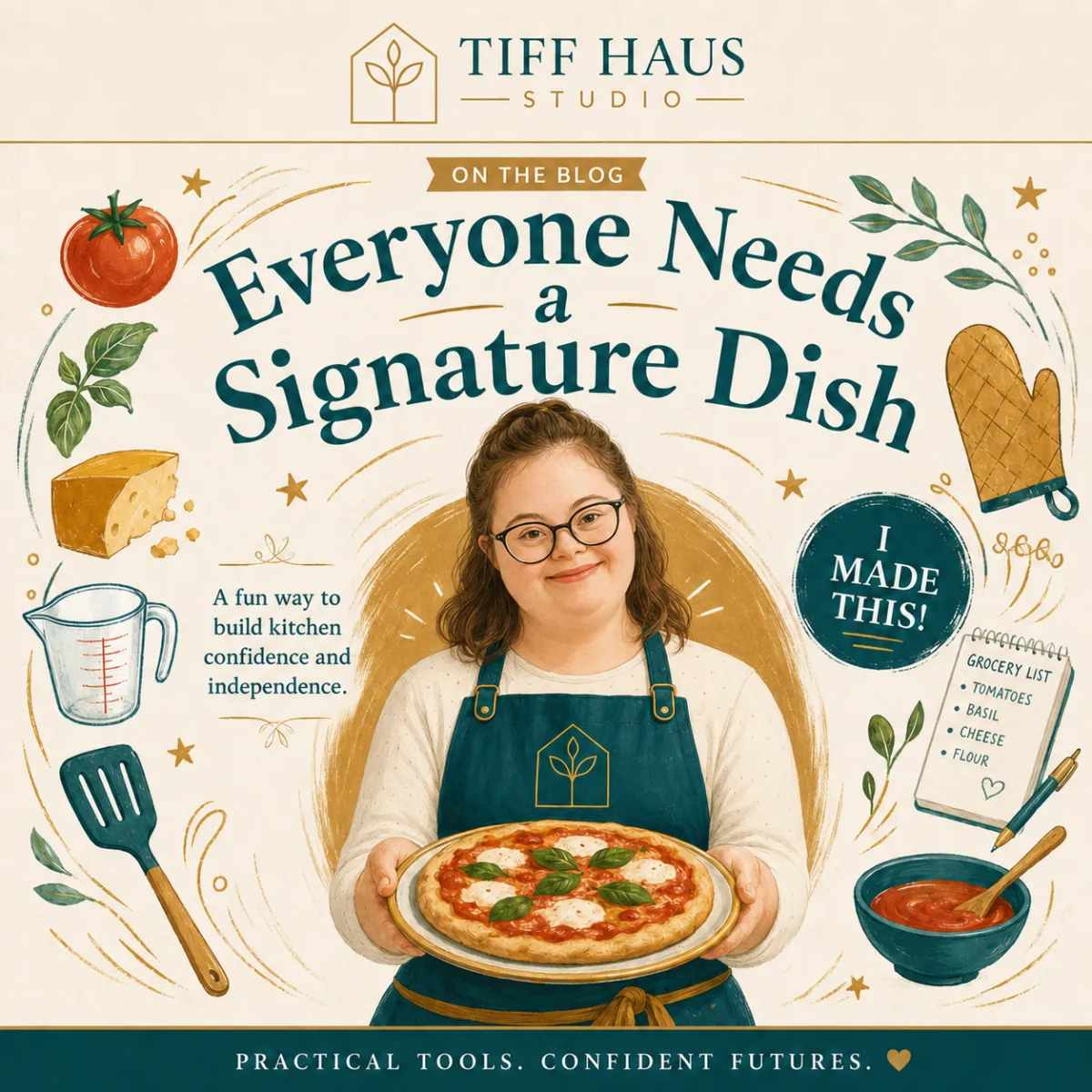
Everyone Needs a Signature Dish: A Fun Way to Build Kitchen Confidence and Independence
Ask most adults what they know how to cook without looking at a recipe, and they probably have at least one answer.
Maybe it is spaghetti, tacos, scrambled eggs, grilled cheese, pancakes, or a surprisingly impressive plate of nachos.
It does not need to be fancy. It just needs to be theirs.
Helping your child choose and master one “signature dish” is a fun way to practice independent living skills without making the experience feel like another assignment.
One familiar meal can teach kitchen safety, grocery shopping, planning, budgeting, following directions, cleaning, and confidence. It can also give your child something they are proud to prepare for themselves and share with other people.
Everyone deserves to have at least one dish they can confidently say, “I know how to make that!”
What Is a Signature Dish?
A signature dish is one meal, snack, dessert, or drink that a person enjoys making and can prepare with increasing independence.
It could be:
Personal pizzas
Tacos
Spaghetti
Scrambled eggs and toast
A turkey sandwich
Quesadillas
Pancakes
A baked potato with toppings
A smoothie
A snack board
Microwave macaroni and cheese
A favorite family recipe
The goal is not to choose the most impressive dish. The goal is to choose something the person likes enough to practice more than once.
A signature dish should feel achievable, age-respectful, and personally meaningful.
Why Is Cooking One Dish Such a Valuable Life Skill?
Preparing even a simple meal requires several skills to work together.
A person may need to:
Decide what they want to make
Check which ingredients are available
Create a shopping list
Find items at the store
Compare prices
Measure ingredients
Follow steps in the correct order
Use kitchen tools safely
Manage time
Notice when food is fully cooked
Serve the food
Store leftovers
Clean the cooking area
That is a lot of independent living practice hiding inside one plate of tacos.
When the same dish is prepared repeatedly, the steps become more familiar. The individual can spend less energy trying to understand the entire process and more energy completing each part independently.
How Can a Signature Dish Build Confidence?
Success feels good!
When someone prepares a meal and sees another person enjoy it, they receive immediate and meaningful feedback. They created something useful from beginning to end.
That success can change the way a person sees themselves.
Instead of thinking, “I need someone to make my food,” they can begin thinking, “I know how to make this.”
That confidence may eventually spread into other areas. A person who masters a quesadilla may feel more willing to try eggs. Someone who learns to make spaghetti may become interested in choosing a side dish or planning a full dinner.
Independence often grows one successful experience at a time.
How Do You Choose the Right Signature Dish?
Begin with the person’s preferences, not with the meal you think they should learn.
Ask:
What food do you love?
What would you like to know how to make?
Would you rather prepare breakfast, lunch, dinner, a snack, or dessert?
Do you prefer hot food or cold food?
Would you like to use the microwave, oven, air fryer, stovetop, or no cooking appliance?
Is there something you would like to make for another person?
Then consider the person’s current abilities and safety needs.
The best first dish is one that is motivating but not so complicated that it becomes frustrating.
If using a knife or stove is not currently safe, choose a dish that uses pre-cut ingredients, a microwave, an air fryer with support, or no heat at all.
A signature dish can always become more advanced later.
Fun Signature Dish Ideas for Different Skill Levels
Beginner Ideas
These dishes may require little or no heat:
Sandwiches or wraps
Yogurt parfaits
Cereal with fruit
Snack boards
Salads made with pre-cut ingredients
Peanut butter and banana toast
No-bake energy bites
Smoothies with prepared ingredients
Intermediate Ideas
These may involve a microwave, toaster, air fryer, or limited stovetop use:
Quesadillas
Scrambled eggs
Grilled cheese
Microwave baked potatoes
Personal pizzas
Pancakes
Pasta with prepared sauce
Air-fryer chicken tenders and vegetables
More Advanced Ideas
These may involve multiple ingredients, appliances, or cooking times:
Tacos with several toppings
Homemade pizza
A pasta dish with meat and vegetables
Chili
A family casserole
Stir-fry
Baked chicken with a side dish
A favorite family recipe
Skill level is not determined by age. Choose the level that fits the individual’s current abilities and the support available.
How to Teach a Signature Dish in 7 Steps
1. Let the Person Choose the Dish
Choice creates ownership.
Offer a few realistic options if an open-ended question feels overwhelming.
You might ask:
“Would you rather learn tacos, quesadillas, or personal pizzas?”
All of the choices should be dishes you are prepared to help them practice.
2. Make the Recipe Easy to Follow
Traditional recipes can include long paragraphs, unfamiliar measurements, and several instructions packed into one step.
Rewrite the recipe in a format that works for the individual.
You might use:
One direction per line
A numbered checklist
Photos of each step
Pictures of the ingredients
Color-coded measuring tools
A short video demonstration
A recipe displayed on a tablet
A laminated recipe card that can be checked off
Keep the words clear and specific.
Instead of writing “Prepare the ingredients,” list the exact actions:
Place the tortilla on a plate.
Sprinkle cheese on half of the tortilla.
Fold the tortilla in half.
Place it in the pan.
Cook for two minutes.
Flip it with a spatula.
Cook for two more minutes.
3. Practice Kitchen Safety First
Before cooking, review the safety skills needed for that specific dish.
These may include:
Washing hands
Checking expiration dates
Keeping raw meat separate from other foods
Using a knife safely
Turning pot handles away from the edge
Using oven mitts
Knowing which surfaces are hot
Setting a timer
Checking that appliances are turned off
Knowing what to do if something spills, burns, or catches fire
Teach only the safety information that is relevant to the task. Too many warnings at once can be overwhelming.
Supervision should match the person’s current abilities. Independence does not mean removing necessary safety support before the individual is ready.
4. Demonstrate the Dish
Prepare the dish together the first time.
Explain each step briefly, but avoid turning the lesson into a long lecture. Show the person what to do and then give them a chance to participate.
You might prepare the first quesadilla while they watch and then have them prepare the second one with support.
5. Use the Least Amount of Help Needed
It can be tempting to take over when something is slow or messy. Try to pause before stepping in.
Use support in this order:
Wait and give the person time to think.
Point to the recipe.
Give a short verbal reminder.
Demonstrate the step.
Provide physical assistance if necessary.
A crooked sandwich still counts. Uneven pizza toppings are not an emergency.
The person needs room to complete the task in their own way.
6. Practice the Same Dish More Than Once
A dish does not become a signature dish after one attempt.
Prepare it several times. Repetition helps the person remember the order, become more comfortable with the tools, and need fewer reminders.
Try not to change the recipe every time. Familiar ingredients and consistent steps make it easier to see progress.
When the original version becomes comfortable, the person can experiment with different toppings, seasonings, or side dishes.
7. Celebrate the Finished Product
Take a picture. Let the person name the dish. Make a recipe card with their name on it.
You could call it:
Jake’s Famous Quesadillas
Maya’s Saturday Pancakes
Chris’s Loaded Potato
Olivia’s Power Smoothie
Sam’s Better-Than-Takeout Tacos
The name does not need to be serious. The point is to create pride and ownership.
If the person is comfortable, invite someone to taste the dish or let them prepare it for a family meal.
Turn Grocery Shopping Into Part of the Experience
Once the recipe is familiar, include the person in shopping for the ingredients.
They can practice:
Checking the kitchen before shopping
Identifying what needs to be purchased
Creating a list
Locating items in the store
Comparing brands
Staying within a budget
Using self-checkout
Paying with cash or a card
Checking the receipt
Putting groceries away
If a busy grocery store feels overwhelming, begin with a short trip for only two or three ingredients. Shopping online and choosing items for pickup can also provide valuable planning and budgeting practice.
Do Not Forget the Cleanup
Cooking is not finished when the food is ready.
Add cleanup steps to the recipe so they become part of the routine from the beginning.
These might include:
Put unused ingredients away.
Place dirty dishes in the sink or dishwasher.
Wipe the counter.
Turn off the appliance.
Store leftovers.
Throw away the trash.
If cleanup feels like a second large task, begin with only one or two expectations and gradually add more.
What If the Dish Does Not Turn Out Well?
Something will eventually burn, spill, break, or taste strange.
That is not a failed lesson. It is part of learning to cook.
Use the moment to practice problem-solving:
What do you think happened?
Can we fix it?
Is it still safe to eat?
What should we do differently next time?
Do we need a backup meal?
Knowing how to recover when something goes wrong is an important independent living skill.
Try to keep your reaction calm. If every mistake becomes a crisis, the person may become afraid to try again.
Sometimes the best cooking memory begins with a pancake that looks absolutely nothing like a pancake.
Tiff’s Tip
Choose the first signature dish based on what your child is excited to eat, not what you think they should know how to cook.
Motivation matters. Once someone experiences the pride of making a favorite food successfully, it becomes much easier to introduce new skills.
Start with the pizza. The vegetables can join the story later.
Frequently Asked Questions About Teaching Cooking Skills
What is the easiest meal to teach someone with a disability?
The easiest meal depends on the individual’s abilities and preferences. Sandwiches, wraps, yogurt parfaits, personal pizzas, smoothies, and microwave baked potatoes can be good starting points because the steps are easy to separate and adapt.
How can I make a recipe easier to understand?
Use one instruction per step, simple language, photos, icons, color-coded tools, timers, or a short video. Remove unnecessary details and keep the recipe format consistent each time it is used.
What if my child is afraid of the stove or oven?
Begin with no-cook recipes or appliances they feel comfortable using. Teach safety skills gradually and never rush someone into using equipment before they are ready.
Can an adult with an intellectual disability learn to cook independently?
Yes! Many adults with intellectual and developmental disabilities can learn to prepare food with the right instruction, repetition, adaptations, and safety supports. Independence may look different for each person.
How do I know when to reduce supervision?
Reduce support gradually as the person demonstrates that they can follow the steps and use equipment safely. Continue providing supervision for any task that still presents a meaningful safety risk.
One Dish Can Open the Door to More Independence
A signature dish is more than something to eat.
It is a chance to make a choice, follow a plan, practice safety, solve problems, create something useful, and experience the satisfaction of saying, “I made this.”
Start with one dish. Keep the steps simple. Practice it more than once and allow the person to make it their own.
It may begin with a sandwich, a smoothie, or a plate of nachos.
But the confidence built in the kitchen can reach far beyond the meal.
At Tiff Haus Studio, we help individuals with intellectual and developmental disabilities and their families build practical skills for greater independence.
If you would like help identifying your child’s next steps and creating a realistic plan for the future, schedule a free 20-minute Clarity Call with Tiff Haus Studio.