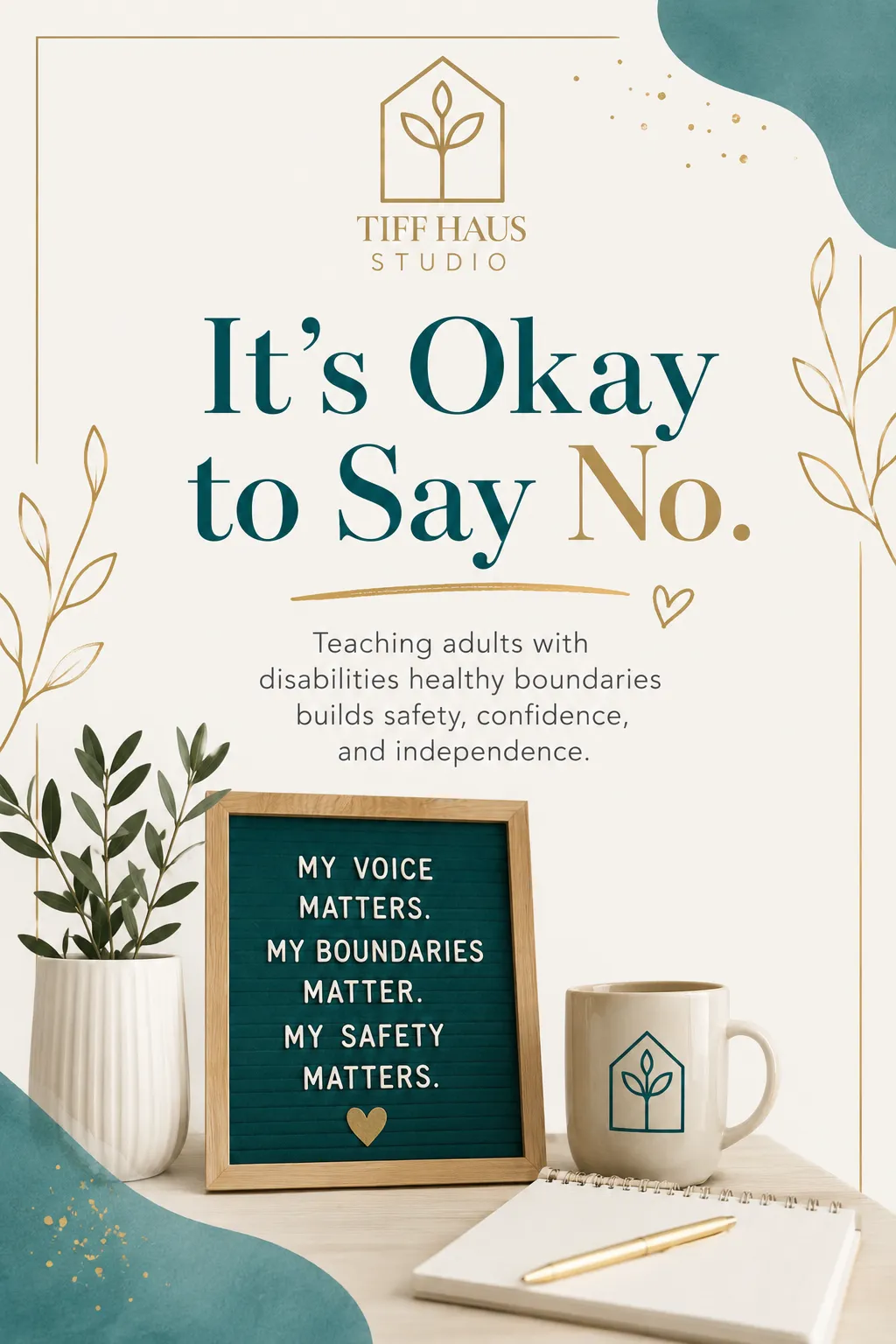
Why Teaching Adults with Disabilities to Say No Is an Essential Safety Skill
"Be Nice" Isn't Always the Safest Advice
From the time they're little, many children hear the same messages:
"Be polite."
"Listen to adults."
"Don't argue."
"Do what you're told."
For many individuals with intellectual and developmental disabilities, these lessons are repeated even more often because families, teachers, and caregivers want to encourage respectful behavior.
But here's the problem.
If someone has spent their entire life believing they should always comply, they may struggle to recognize when it's appropriate to say no.
That can leave them vulnerable to people who don't have their best interests at heart.
Learning to say "no" isn't disrespectful.
It's an essential life skill.
Why This Matters
Adults with disabilities experience significantly higher rates of abuse, neglect, financial exploitation, and manipulation than the general population.
Many situations don't begin with obvious danger.
They start with seemingly harmless requests:
"Can you loan me twenty dollars?"
"Don't tell your parents."
"Come with me."
"Just sign this."
"If you were really my friend, you would…"
Someone who has never practiced questioning others may not recognize these as warning signs.
Safety Includes Confidence
We often think of safety skills as:
Looking both ways before crossing the street.
Knowing what to do in a fire.
Memorizing an emergency phone number.
Those are important.
But emotional safety matters too.
Individuals should know they have permission to:
Say no.
Walk away.
Ask questions.
Change their mind.
Call a trusted adult.
Report something that makes them uncomfortable.
Practice Real-Life Scenarios
Instead of simply talking about safety, practice it.
Role play situations such as:
Someone asking to borrow money.
Someone wanting personal information.
Someone asking for a hug.
Someone pressuring them to keep a secret.
Someone inviting them somewhere unexpectedly.
Practicing responses builds confidence before a real situation happens.
Teach the Difference Between Secrets and Surprises
This is one of the simplest lessons families can teach.
A surprise is temporary.
A secret is something someone wants you to hide.
Healthy adults should never ask someone to keep a secret that makes them uncomfortable.
Respect Their "No"
One of the best ways to teach someone they can say no...
...is to respect it when they do.
If they decline a hug, don't force one.
If they don't want to participate in an activity, listen.
If they express discomfort, take it seriously.
Every time we respect healthy boundaries, we're teaching them that their voice matters.
Build Self-Advocacy Every Day
Self-advocacy isn't only speaking at an IEP meeting.
It's also saying:
"I don't understand."
"I need help."
"I don't feel comfortable."
"I'd rather do something else."
"I changed my mind."
The more opportunities someone has to make choices, the stronger those self-advocacy muscles become.
Independence Includes Personal Safety
At Tiff Haus Studio, we believe independence is about much more than cooking, cleaning, or getting a job.
It's about helping individuals develop the confidence to make safe decisions, recognize unhealthy situations, set boundaries, and trust their instincts.
Those skills protect independence just as much as any household chore ever could.
Because one of the most powerful things a person can learn is this:
"My voice matters, and I have the right to use it."
For even more ways to help your child practice safety, schedule your FREE Clarity Call - I'm here to help!