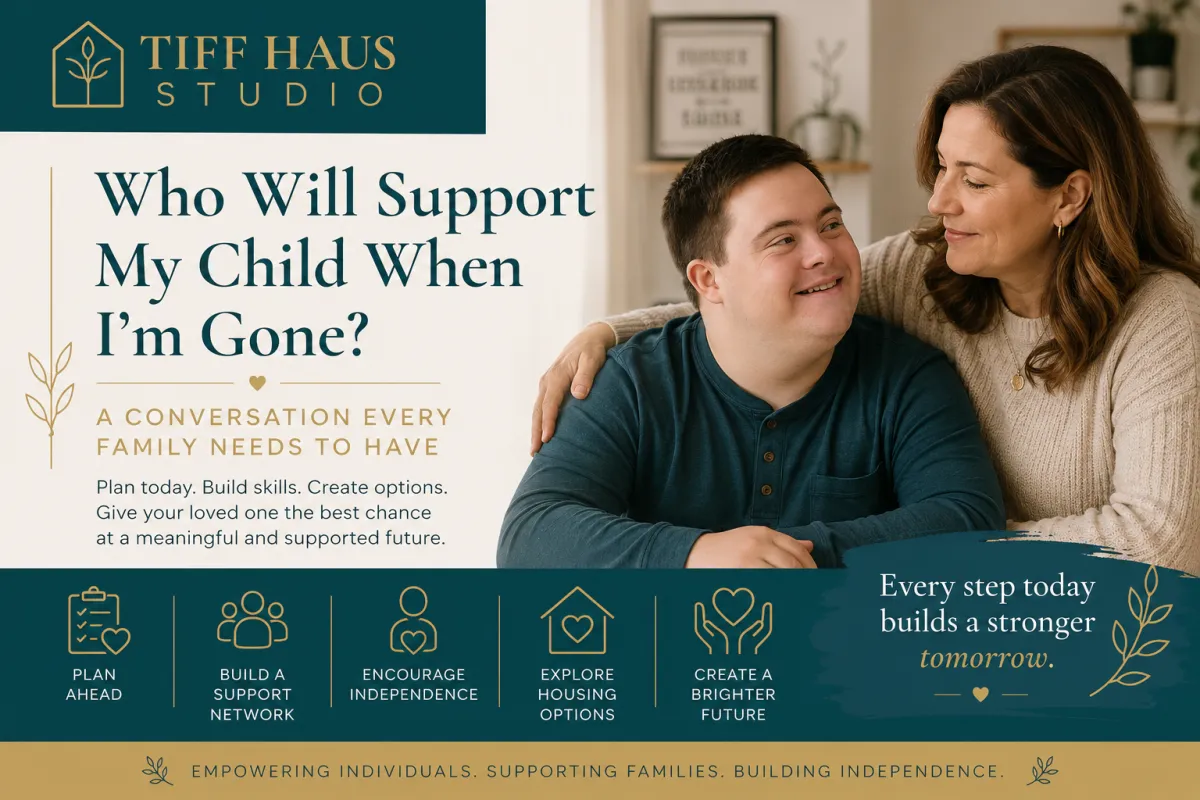
Who Will Support My Child When I'm Gone? A Guide for Families of Adults with Intellectual and Developmental Disabilities
Who Will Support My Child When I'm Gone?
Short Answer: The best way to prepare for the future is to start planning now. Building independent living skills, creating a support network, exploring housing options, and documenting important information can help ensure your loved one continues to thrive even when you are no longer able to provide support.
For many parents of individuals with intellectual and developmental disabilities (IDD), this is one of the most difficult questions they will ever ask:
What will happen to my child when I am gone?
It is a question rooted in love, concern, and the desire to know that your loved one will be safe, supported, and able to live a meaningful life.
The good news is that future planning does not have to be overwhelming! Taking small steps today can create more opportunities, greater independence, and a stronger support system for tomorrow.
Why Families Are Talking About This More Than Ever
Families across the autism and IDD communities are increasingly discussing future planning because several important trends are occurring at the same time:
Caregivers are aging.
Individuals with disabilities are living longer than ever before.
Housing options are limited in many communities.
Adult services often have long waiting lists.
Families are recognizing the importance of planning before a crisis occurs.
The earlier a family begins planning, the more choices they typically have.
What Should Parents Do to Prepare for the Future?
The most effective future planning often includes five key areas:
1. Build Independent Living Skills
Every skill your loved one learns today can increase their options in the future.
Examples include:
Personal hygiene
Meal preparation
Laundry
Household cleaning
Time management
Transportation skills
Money management
Communication and self advocacy
Independence does not mean doing everything alone. It means developing the skills needed to participate as fully as possible in daily life.
2. Create a Circle of Support
One of the biggest mistakes families make is assuming one person will always be available to provide support.
Instead, consider building a team that may include:
Siblings
Extended family members
Trusted friends
Faith community members
Service providers
Support coordinators
Financial and legal professionals
A strong support network can provide stability and continuity over time.
3. Explore Housing Options Early
Housing is often one of the greatest concerns for families of adults with disabilities.
Potential options may include:
Living with family
Supported living services
Shared housing arrangements
Independent apartments with support
Group living environments
Tiny homes located near family members
There is no one size fits all solution. The best option depends on the individual's needs, preferences, goals, and support requirements.
4. Organize Important Information
Imagine someone else suddenly needing to step in and support your loved one.
Would they know:
Medical providers?
Medications?
Daily routines?
Communication preferences?
Behavioral supports?
Emergency contacts?
Financial information?
Creating a future planning binder can make a tremendous difference during a transition!
5. Develop a Long Term Vision
Future planning is about safety AND quality of life.
Ask yourself:
What does my loved one want for their future?
Where do they want to live?
What relationships are important to them?
What activities bring them joy?
What level of independence is possible with the right supports?
A meaningful future starts with a clear vision!
Independence Is a Spectrum
Many families worry that their loved one may never live completely independently.
The truth is that independence looks different for everyone.
For some individuals, independence may mean:
Living alone with periodic support
Managing personal care independently
Working in the community
For others, independence may mean:
Making personal decisions
Participating in community activities
Contributing to household responsibilities
Living in a supported environment
The goal is not perfection.
The goal is progress.
Common Questions About Future Planning for Adults With Disabilities
What happens to adults with disabilities when their parents die?
The answer depends on the planning that has been completed beforehand. Adults with disabilities may receive support from family members, professional caregivers, supported living programs, residential services, or community organizations. Early planning helps create smoother transitions.
When should parents start future planning?
Parents should begin future planning as early as possible. Children and teens can begin learning independent living skills long before adulthood.
Can adults with intellectual and developmental disabilities live independently?
Many adults with IDD can live independently or semi independently when they have the appropriate skills, supports, housing, and community resources.
What is the most important part of future planning?
The most important step is starting. Small actions taken consistently over time often lead to the greatest long term outcomes.
How can parents help their adult child become more independent?
Parents can encourage independence by teaching daily living skills, promoting decision making, creating opportunities for responsibility, and gradually increasing expectations while providing appropriate support.
The Bottom Line
The question, "What will happen to my child when I am gone?" is not easy to ask.
But it is one of the most important conversations a family can have.
Future planning is not about expecting the worst. It is about creating opportunities, building skills, strengthening support systems, and preparing for a future where your loved one can continue to grow and thrive.
Every skill learned today is an investment in tomorrow!
Every plan created today provides greater peace of mind for the future.
At Tiff Haus Studio, we help individuals with intellectual and developmental disabilities build practical skills for greater independence while helping families create a roadmap for the future.
Ready to Take the First Step?
Schedule a FREE Clarity Call to discuss your loved one's goals, current level of independence, and next steps toward a more confident future.