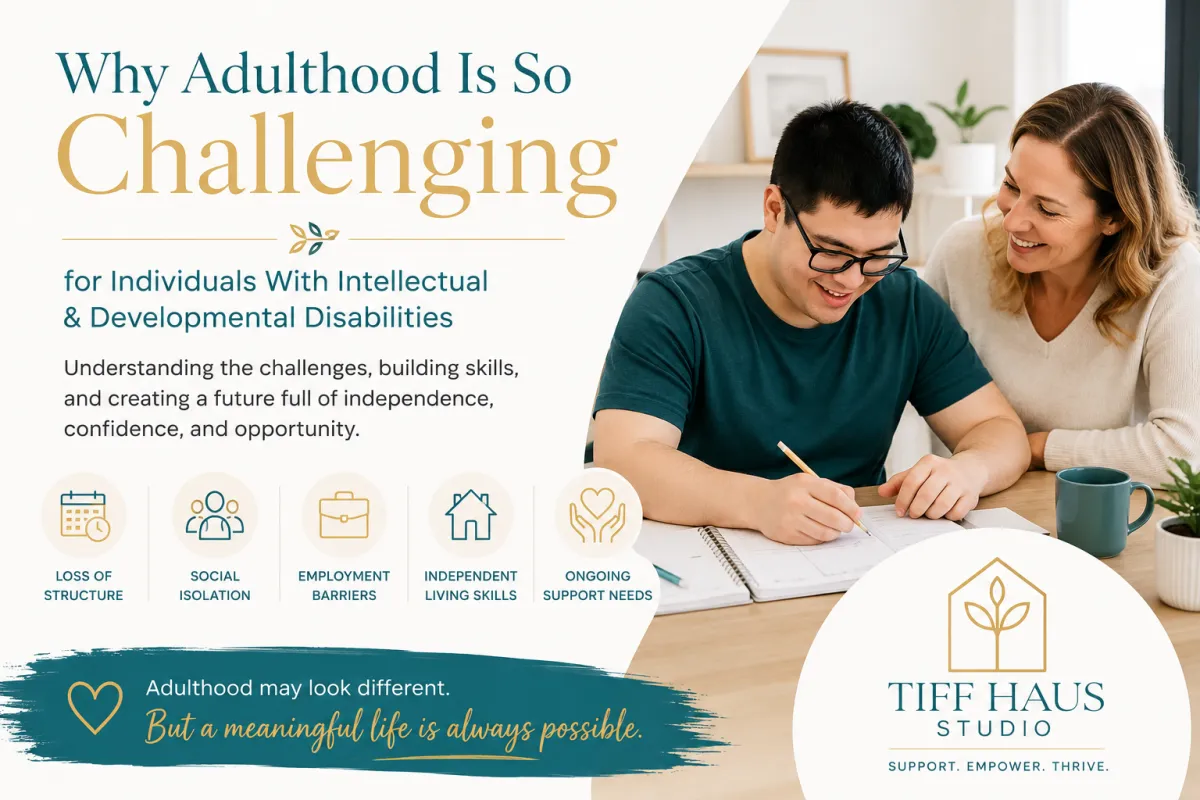
Why Is Adulthood So Challenging for Individuals With Intellectual and Developmental Disabilities?
For many individuals with intellectual and developmental disabilities, adulthood can feel overwhelming because the structure and support provided during childhood and high school often change dramatically after graduation.
Many families suddenly face challenges related to:
Independent living skills
Employment
Social isolation
Loss of school-based services
Daily routines and structure
Transportation
Long-term planning
The good news is that independence, confidence, and life skills can absolutely continue developing over time with the right support, opportunities, and guidance!
At Tiff Haus Studio, we help families navigate this transition by focusing on practical independence, life skills, confidence-building, and realistic support systems that help individuals thrive in adulthood.
What Happens to Individuals With Disabilities After High School?
One of the biggest challenges families face is the sudden shift that happens after high school graduation.
In school, individuals often have:
Structured schedules
Built-in social interaction
Therapies and support services
Transition programs
Daily routines
Adult guidance and supervision
After graduation, many of those supports disappear or become harder to access.
This transition can feel overwhelming for both the individual and their family.
Many parents describe this stage as “falling off a cliff” because adulthood often comes with fewer built-in supports and far more responsibility.
Why Do Adults With Developmental Disabilities Struggle With Independence?
Adults with developmental disabilities may struggle with independence because many daily living skills require direct teaching, repetition, support, and real-world practice.
Some individuals may need support with:
Personal hygiene
Cooking and meal preparation
Cleaning and household management
Transportation
Communication skills
Time management
Organization
Money management
Safety awareness
Problem-solving
This does not mean someone is incapable of independence. It often means they need individualized support and opportunities to practice skills consistently.
What Are the Most Important Independent Living Skills?
Some of the most important independent living skills for adults with intellectual and developmental disabilities include:
Self-Care Skills
Hygiene
Grooming
Laundry
Dressing appropriately
Managing medications
Household Skills
Cooking simple meals
Cleaning
Grocery shopping
Basic organization
Following routines
Communication Skills
Asking for help
Self-advocacy
Social communication
Workplace communication
Phone and appointment skills
Safety Skills
Community safety
Internet safety
Emergency response
Stranger awareness
Transportation safety
Employment Skills
Following directions
Time management
Task completion
Workplace behavior
Interview skills
Building these skills gradually can increase confidence and long-term independence!
Why Is Social Isolation Common for Adults With Disabilities?
Many adults with disabilities experience social isolation after high school because structured social opportunities often decrease significantly during adulthood.
After graduation:
Friendships may change
School routines end
Activities become less structured
Community opportunities can be harder to find
This can lead to loneliness, anxiety, decreased confidence, and reduced motivation.
Creating meaningful opportunities for connection becomes incredibly important during this stage of life.
Families may benefit from exploring:
Social groups
Volunteer opportunities
Community recreation
Faith-based programs
Employment programs
Life skills groups
Supported activities
Can Adults With Intellectual and Developmental Disabilities Work?
Yes. Many adults with intellectual and developmental disabilities can work successfully with the right support, training, and job match.
Employment may look different for every individual.
Some individuals thrive in:
Retail environments
Food service
Office support roles
Animal care
Cleaning and organization jobs
Creative environments
Volunteer-to-employment pathways
Supported employment programs
The key is identifying:
Strengths
Interests
Support needs
Communication styles
Sensory preferences
Learning styles
Employment can help build:
Confidence
Responsibility
Social skills
Financial independence
Daily structure
Purpose and self-esteem
What Can Parents Do to Prepare Their Child for Adulthood?
Parents can begin preparing children for adulthood long before graduation.
Some of the best ways to support independence include:
Start Teaching Life Skills Early
Practice daily routines consistently and allow individuals to participate in real-world responsibilities.
Encourage Decision-Making
Allow individuals to make choices, solve problems, and practice self-advocacy whenever possible.
Focus on Progress Over Perfection
Independence develops gradually over time.
Create Opportunities for Real-World Practice
Practice:
Ordering food
Grocery shopping
Using schedules
Managing chores
Social communication
Community safety
Build Confidence
Confidence often grows through successful experiences, encouragement, and repetition.
What Does Independence Actually Look Like?
One of the biggest misconceptions about adulthood and disabilities is the idea that independence must look the same for everyone.
It does not.
Some individuals may:
Live independently
Live with family
Use supported living services
Work full-time
Work part-time
Volunteer
Need ongoing support
All of these paths can still lead to meaningful, fulfilling lives.
Independence is not about doing everything alone. It is about building the highest level of confidence, participation, and quality of life possible for each individual.
Final Thoughts
Adulthood can feel uncertain for individuals with intellectual and developmental disabilities and the families supporting them. But with guidance, realistic expectations, life skills support, and meaningful opportunities, adulthood can also become a season of tremendous growth.
Every small skill matters.
Every step toward independence matters.
Every opportunity to build confidence matters.
At Tiff Haus Studio, we believe individuals deserve support that empowers them to build meaningful, capable, and connected adult lives at their own pace. This stage does not have to feel like you're falling off a cliff! With the right support, individuals can continue building skills, confidence, and possibilities long after graduation. And I can help! Either Schedule Your FREE Clarity Call or check out my Resources Page!