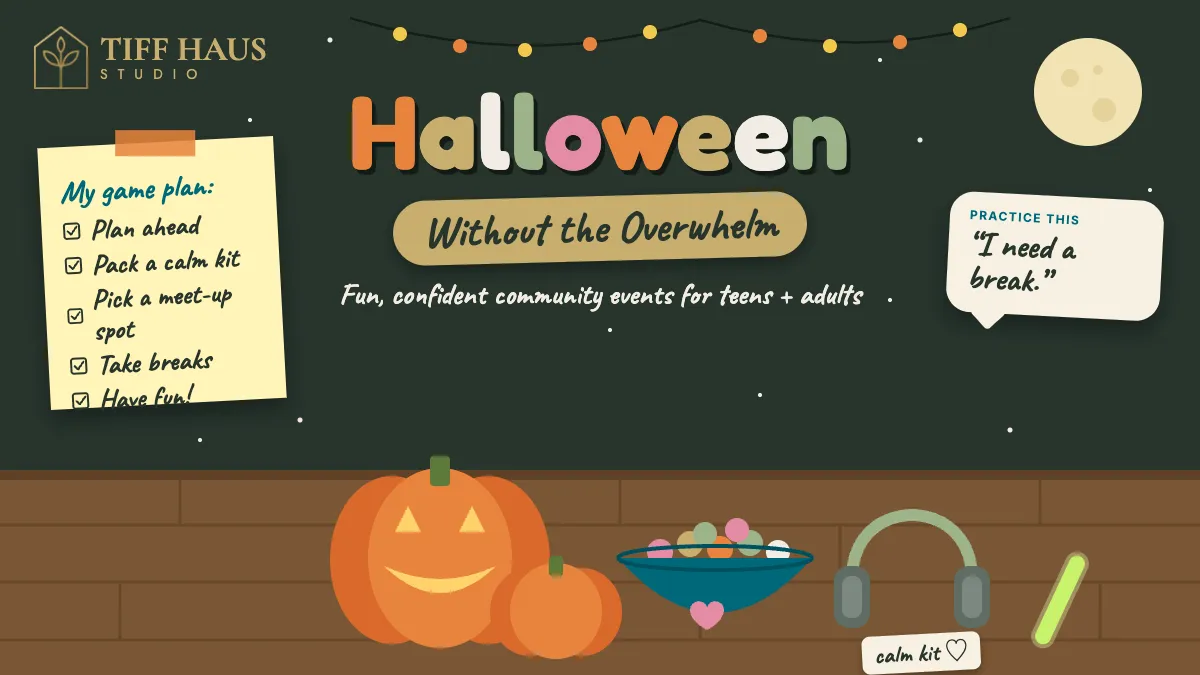
Halloween Without the Overwhelm: Practicing Independence at Community Events
Halloween can be one of the most exciting nights of the year. Costumes, candy, pumpkin patches, fall festivals, trunk-or-treats. There's so much to enjoy!
It can also be a lot. Crowds, noise, flashing lights, unfamiliar places, masks, and a schedule that's anything but routine. For many teens and adults with intellectual and developmental disabilities, the fun can quickly tip into overwhelm.
Here's the good news: with a little planning, Halloween becomes a perfect chance to practice real independence skills in a setting that's naturally fun and motivating. Planning, making choices, handling money, staying safe, and speaking up for what you need all show up on Halloween night.
Let's make this year both fun and confidence-building!
Halloween Is for Adults, Too
First, a reminder: there's no age limit on fun. But there's also no "right" way to celebrate. Your loved one might enjoy:
A fall festival or pumpkin patch
A community trunk-or-treat
A costume party with friends
Carving or painting pumpkins at home
Handing out candy at the door, which is a fantastic independence job!
Let your loved one choose how they want to celebrate. That choice is the first independence skill of the night.
1. Plan Ahead Together
Why it matters: Knowing what to expect lowers anxiety and builds confidence.
Try this:
Look at the event's website or photos together before you go.
Make a simple plan: where you're going, what you'll do, and when you'll leave.
Use a visual schedule or a short list on their phone.
Talk through "what if" moments: What if it's too loud? What if we get separated?
Tiff's Tip: Let your loved one lead the planning. Ask, "What do you want to do first?" instead of handing them a finished plan.
2. Choose a Comfortable Costume
Why it matters: An itchy, tight, or hot costume can ruin the night before it starts.
Try this:
Pick comfort first: soft fabrics, their own clothes as a base, no scratchy tags.
Skip full masks if they're uncomfortable. Face paint, a hat, or a themed shirt works great.
Do a practice run at home. Wear the costume for an hour and see how it feels.
3. Prepare for Sensory Overload
Why it matters: Crowds, noise, and flashing lights can be overwhelming for anyone, and especially for people with sensory sensitivities.
Pack a "calm kit":
Noise-reducing headphones or earplugs
Sunglasses or a hat for bright or flashing lights
A favorite fidget or comfort item
Water and a snack
Teach one simple script: "I need a break." Practice it at home so it's easy to say in the moment. Then honor it, every time.
Tiff's Tip: Pick a "calm spot" together when you arrive, like a bench, the car, or a quiet corner. Knowing there's a place to reset makes it easier to stay.
4. Practice Safety Skills
Why it matters: Community events are busy, and it's easy to get separated.
Before you go:
Choose a meeting spot in case you get separated, and point it out when you arrive.
Make sure their phone is charged, and practice calling or texting you.
Carry an ID card with their name and your phone number.
Add something bright, like a glow stick, reflective tape, or a flashlight, if you'll be out after dark.
Practice together: Crossing streets safely, staying with the group, and knowing who to ask for help (a staff member, an event volunteer, or a police officer).
5. Handle Your Own Money
Why it matters: Pumpkin patches and fall festivals are perfect low-stakes money practice.
Try this:
Give your loved one a set amount, like $10 or $20, for the event.
Let them decide: a pumpkin, a snack, a hayride ticket, a game?
They pay, wait for change, and keep track of what's left.
Sound familiar? It's a spooky-season version of our $10 Grocery Challenge!
6. Practice Social Skills
Why it matters: Halloween is full of quick, friendly interactions, which makes it great for building social confidence.
Simple scripts to practice:
"Trick or treat!" and "Thank you!"
"I like your costume!"
"No, thank you." (for a candy they don't like, or a haunted house they don't want to try)
"Can I have a different one, please?"
Handing out candy at home? That's social practice too: opening the door, greeting people, offering the bowl, and saying "Happy Halloween!"
7. Know When to Leave
Why it matters: Leaving on a good note is better than staying until it falls apart.
Agree on a leave time ahead of time, and set a phone alarm. If your loved one says they're done early, that's okay. Recognizing "I'm ready to go home" is a self-advocacy skill worth celebrating.
Tiff's Tip: Afterward, talk about it. What was your favorite part? What was hard? What would you do differently next year? Reflection turns one night into lasting learning.
A Note for Parents
It can be tempting to skip community events altogether to avoid a hard moment. But every event your loved one plans, navigates, and recovers from builds confidence that carries into everyday life.
You don't have to get it perfect. Start small, plan ahead, and let them lead where they can. That's how independence grows, one small win at a time.
Frequently Asked Questions
How can I help my adult child with autism enjoy Halloween?
Plan ahead together, choose a comfortable costume, pack sensory supports like headphones, pick a calm spot, and agree on a leave time. Let them make as many choices as possible.
Is it okay for adults with disabilities to trick-or-treat?
Many adults enjoy trick-or-treating, and many communities welcome it. Adults can also enjoy fall festivals, trunk-or-treats, costume parties, or handing out candy at home. The best choice is the one your loved one chooses.
How do I prepare for sensory overload at Halloween events?
Preview the event, bring noise-reducing headphones and comfort items, identify a quiet spot to take breaks, and practice asking for a break ahead of time.
What independence skills can be practiced on Halloween?
Planning, making choices, managing money, social greetings, staying safe in crowds, and self-advocacy skills like asking for a break or deciding when to leave.
How can I keep my adult child safe at crowded events?
Choose a meeting spot, keep their phone charged, carry an ID card with your contact information, use glow sticks or reflective gear after dark, and practice asking staff or volunteers for help.
Next Steps
Ask your loved one how they want to celebrate this year, and let them choose.
Plan one event together, including a meeting spot, a calm spot, and a leave time.
Pack a calm kit and practice saying "I need a break."
Looking for more seasonal ideas? Check out our Fall Fun Bucket List That Builds Independence.
Want support planning for bigger steps toward independence? Book a free Clarity Call and we'll map out your family's next step together.
Independence can be taught, and your family doesn't have to figure it out alone. Happy Halloween! 🎃